Line of credit utilization is the share of your credit limit that you are using right now. Divide your outstanding balance by your limit and multiply by 100. If a lender reports the line to the consumer credit bureaus, that percentage can feed your personal credit score. If it does not, the line may never touch your personal utilization at all. Which of those applies to you depends on the type of line and the lender’s reporting policy, and this guide shows you how to find out.
We wrote it for business owners who use or plan to use a line of credit and want to know what the number means for the next financing decision.
A line of credit is revolving credit. The lender sets a limit, you borrow up to it, you repay, and the room opens up again. Utilization compares how much of that room you are occupying.
The formula is simple:
Utilization = outstanding balance ÷ credit limit × 100
A few examples:
| Credit limit | Balance | Utilization |
|---|---|---|
| $50,000 | $5,000 | 10% |
| $50,000 | $15,000 | 30% |
| $50,000 | $25,000 | 50% |
| $50,000 | $45,000 | 90% |
Scoring models can calculate this per account and across all your revolving accounts combined. myFICO explains that the amounts-owed category accounts for roughly 30 percent of a typical person’s FICO score, which is why a maxed-out line can hurt even when every payment is on time.
The number is a snapshot, not a history. If you pay a balance down, the ratio improves on the next report. That is good news, because it is one of the few score factors you can change within a single billing cycle.
Sometimes. The answer turns on what kind of line it is and who sees it.
An unsecured personal line of credit works much like a credit card. Experian describes it as an account where you can borrow up to a set amount whenever you need it, and what you use becomes a balance on your report. Expect it to count as revolving utilization.
This is where owners get surprised. A business line is not automatically walled off from your personal file. According to Experian, if the issuer reports business card activity to consumer bureaus, the debt and your payments may appear on your individual report. The same logic applies to a business line backed by a personal guarantee.
Some lenders report only negative events, such as missed payments. Others report everything. The only way to know is to ask the lender directly before you apply.
A CFPB study of commercial accounts on consumer reports found that only a small fraction of potential furnishers send information on commercial loans to consumer bureaus. So reporting practice varies a lot from lender to lender.
A HELOC is revolving in nature, but major scoring models typically exclude it from revolving utilization calculations. It still appears on your report, and the payment history still matters.
| Type of line | Usually counted in personal utilization? | What to check |
|---|---|---|
| Personal line of credit | Yes | Limit and balance reporting |
| Business line, reported to consumer bureaus | Yes | Whether the lender reports all activity or only negative |
| Business line, reported only to commercial bureaus | No | Whether a personal guarantee is required |
| HELOC | Typically excluded from utilization | Payment history still counts |
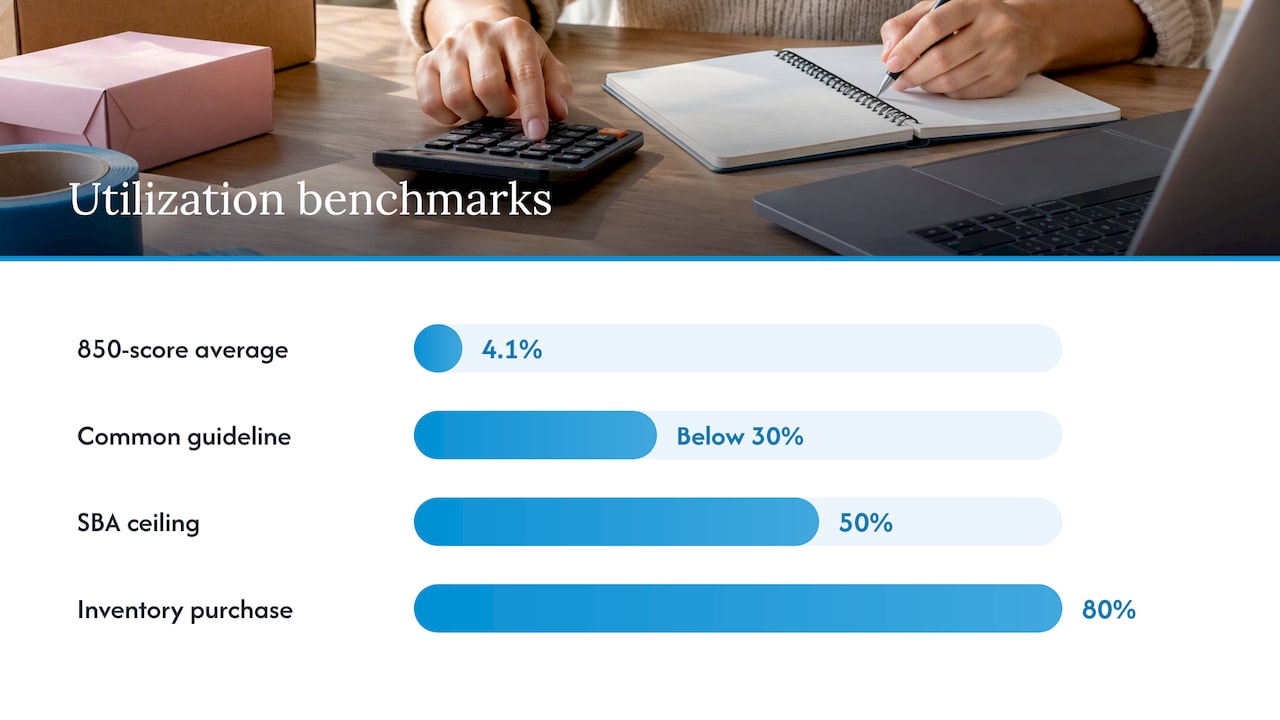
There is no single magic number, but the direction is clear: lower is better.
Three points of nuance help here.
First, a 0% report is not necessarily ideal. myFICO’s revolving accounts FAQ explains that scoring models look for evidence of responsible use, so a small balance paid off regularly can be preferred over no activity at all. You do not need to carry debt or pay interest to get this effect. A small draw repaid in full before the due date is enough.
Second, utilization is both per account and overall. One line at 90% can drag you down even if your total looks fine.
Third, a line you draw on for business reasons can swing hard. A $40,000 inventory purchase on a $50,000 limit puts you at 80% overnight. If you are about to apply for other financing, time that draw carefully.
Lenders evaluate you, not just your company, especially when the business is young. The CFPB-related guidance summarized by Experian is blunt about this: when you sign a personal guarantee, business debt can attach to your personal profile, and lenders may review your personal credit history for business lending under the Fair Credit Reporting Act.
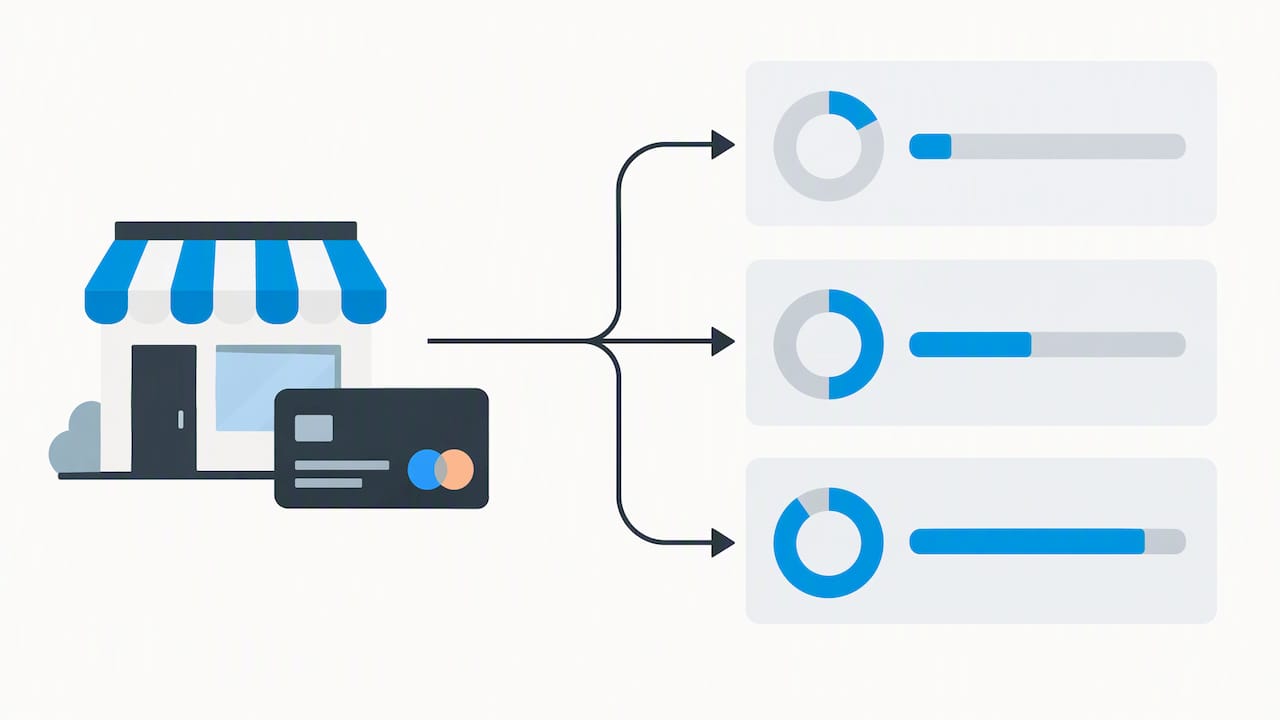
That means high utilization can affect both whether you are approved and what it costs. It also means different lenders may see different things. One bank may pull Experian while another pulls TransUnion or Equifax, so your utilization can look different from lender to lender. The CFPB recommends reviewing your reports before you apply, and for significant capital we would pull all three.
If you want to see how scoring and lender review fit together on the other side of the table, this explainer on how lenders evaluate business credit and financing is a useful companion read, particularly if your goal is an acquisition rather than day-to-day working capital.
For our own deeper dives, see how business funding impacts your personal credit score and what score you need to qualify for a business loan.
Your commercial score is not a copy of your personal one. In its business credit webinar, the CFPB points out that a business builds credit by opening active accounts, paying on time and having that activity reported. It also notes that business scoring models are proprietary and vary across bureaus, and some reward paying early or paying down larger balances, not just paying on time.
The practical takeaway: do not manage only one number. Keep personal utilization healthy for personal-guarantee lenders, and build a clean, reported payment record on the business side.
These steps are ordered from fastest to slowest.
Say you own a landscaping company with a $30,000 line and a $12,000 personal card limit. In March you draw $18,000 for equipment and carry $4,800 on the card.
You plan to apply for new financing in six weeks. You pay the card down to $1,200 and put $8,000 against the line before each statement closes. Now the line is at about 33% and the card at 10%, and the combined figure is 11,200 ÷ 42,000, or about 27%. Nothing about the business changed except the timing of payments. Whether the line shows up on your personal report at all depends on the lender’s reporting policy, so confirm that too.
We operate a marketplace that connects small and medium-sized businesses with banks and alternative lenders, so we see the same pattern constantly. Owners treat the line of credit as a safety net and then use all of it. When a good opportunity arrives, whether an SBA loan or a larger working capital facility, the maxed-out line is the first thing a lender notices.
Our advice is plain. Use the line, because that is what it is for, but plan your draws. Know whether your lender reports to the consumer bureaus. Know whether you signed a personal guarantee. And before you apply anywhere, look at your reports so that nothing surprises you. If your credit is imperfect, that does not shut the door. It means the timing and the lender match matter more.
If you want to go further on protecting yourself, read our pieces on protecting your credit score during business borrowing, loans without a personal guarantee and reducing personal liability.
— Rob
The SBA describes a line of credit as cash on demand up to a set limit, where you pay interest only on the funds you draw. That makes it well suited to uneven cash flow, seasonal inventory and short gaps between invoicing and payment. It is a poor fit for long-term purchases that you cannot repay quickly, because the balance sits in your utilization ratio the whole time. For those, a term product such as an SBA loan can be a better match.
Secured and unsecured lines also differ in what you put at risk. We compare them in unsecured vs secured lines of credit.
If you are weighing a line of credit against other funding, Fordham Capital can help you compare. We use a one-page application and a network of banks and lenders, and the application does not impact your credit. Our published pricing is 1-3% per month for a line of credit and 8% per year for an SBA loan. Working capital has no published price. We are an intermediary, so final terms come from the lender that makes the offer.
A personal line of credit does, because it is treated like a credit card. A business line counts toward your personal utilization only if the lender reports it to consumer bureaus. HELOCs are typically excluded from utilization calculations by major scoring models.
Pay balances down before the statement closing date, ask for a higher limit, and avoid concentrating debt on one account. Because utilization reflects only your current reported balances, it can improve within one or two billing cycles. Keep paying on time throughout.
Not necessarily. FICO’s guidance says that a small reported balance paid off regularly can be preferred over no activity. A low single-digit or low double-digit ratio is a reasonable aim, and you do not need to pay interest to get it.
It can, if the lender reports the line to consumer bureaus or you signed a personal guarantee that leads to reporting. Ask your lender about its reporting policy before you apply. Some report only negative activity, while others report everything.
At Fordham Capital, we've made the application process straightforward and reassuring. Dive in and explore your financial options with confidence, knowing there's no impact on your credit score and no obligations. We review your details and offer customized solutions based on what you're looking for.