
Before you sign any loan document, here is the short version: negotiate a limited or time-capped guarantee, push for carve-outs that exclude your home and retirement accounts, seek asset-secured or non-recourse financing where possible, require a release clause tied to refinance or sale, and have an attorney review every guarantee before you sign. That combination, done before the ink dries, is how you reduce personal liability in business borrowing without walking away from the capital you need.
Six things to do right now, before signing:
Pro Tip: When the loan officer asks you to sign the guarantee form, say this: “We’re happy to provide a guarantee, but we’d like to discuss a cap and a sunset provision before we finalize terms.” That one sentence signals you know what you’re doing and opens the negotiation.
Have counsel review the guarantee before signing. Every time, no exceptions.
Negotiating a limited, time-capped guarantee with asset carve-outs before signing is the single most effective way to reduce personal liability in business borrowing.
| Point | Details |
|---|---|
| Negotiate before signing | Request a dollar cap, sunset clause, and carve-outs on every guarantee before the loan closes. |
| SBA loans require guarantees | Every owner with 20% or more equity must sign an unlimited guarantee for most SBA 7(a) loans. |
| Entity formalities matter | Separate accounts, proper capitalization, and signed contracts in the entity name are what courts look for. |
| Post-signing options exist | Refinancing, collateral substitution, and phased-release modifications can reduce exposure after the fact. |
| Fordhamcapital | Connects businesses to a lender network with varied guarantee requirements; one-page application, no credit impact, 24-hour approvals. |
A personal guarantee is a contractual promise that makes you, the individual owner, personally responsible for a business debt if the business cannot pay. According to Nolo, a signed guarantee effectively removes the LLC or corporate shield for that specific loan, allowing lenders to pursue your personal assets in collection efforts.
Unlimited vs. limited guarantees. An unlimited guarantee holds you liable for the full loan balance, plus interest, fees, and collection costs. A limited guarantee caps your exposure, either at a fixed dollar amount or a percentage of the outstanding balance.
Joint vs. several guarantees. A joint guarantee means all guarantors share liability equally. A several guarantee means each guarantor is individually liable for the full amount, regardless of what co-owners contribute. If you have business partners, the distinction matters enormously: a several guarantee can leave one owner holding the entire obligation if the others cannot pay.
Burn-down and sunset features. A burn-down guarantee automatically reduces your exposure as the loan balance decreases. A sunset clause terminates the guarantee entirely after a defined period or milestone. These features are negotiable and worth requesting on every deal.
Industry surveys tracked by the Federal Reserve’s small business research consistently show that a majority of small businesses with outstanding debt carry some form of personal guarantee. Signing one is not unusual, but signing one without negotiating its terms is a costly mistake.
One more point that trips up many owners: business bankruptcy does not automatically discharge a personal guarantee. The lender can still pursue you personally after the business folds, which is exactly why narrowing the guarantee before you sign matters so much.
The best time to limit personal risk on business loans is before the term sheet is finalized. Here is a prioritized checklist.
Entity and financial setup (complete before approaching lenders):
Negotiation tactics to request during underwriting:
Sample clause prompts to bring to your attorney or lender:
Pro Tip: Bring your financials to the first lender meeting, not the second. Lenders who see organized documentation early are more likely to engage on guarantee terms because you’ve already reduced their perceived risk. Preparation is leverage.
Reviewing what lenders look for in loan approval before you apply gives you a clearer picture of which documents move the needle.
Lenders require personal guarantees because small businesses carry higher default risk than established corporations, and the guarantee gives them a second source of repayment. Most traditional banks and the SBA require them as standard policy, not as a negotiating position.
SBA loans are the clearest example. Under SBA rules, every owner with 20% or more equity must sign an unlimited, unconditional personal guarantee for most SBA 7(a) loans. This is not negotiable with the lender; it is a program requirement.
A quick look at typical lender types:
Guarantee-free business financing exists, but it is uncommon for early-stage or thin-credit businesses. Lenders waive guarantees mainly when the business can be underwritten on its own revenue or collateral. The trade-off is usually a higher interest rate, tighter covenants, or a shorter repayment term.
Understanding how business funding affects your personal credit is equally relevant here, since some lenders pull personal credit as part of guarantee underwriting even when the loan is technically a business product.
This is where the real work happens. Carve-outs, caps, time-limits, and release-on-refinance provisions are practical, negotiable contract tools that can materially reduce your exposure when supported by clear financials or substitute protections.
The six clause types to request, in priority order:
Sophisticated borrowers use waiver-of-exhaustion and phased release clauses to force lenders to exhaust business collateral first and to reduce guaranty exposure automatically over time. Most owners never ask for these provisions, which is why most owners never get them.
What lenders expect in return. Accepting a cap or carve-out usually means the lender will ask for something: a slightly higher interest rate, additional collateral, a shorter amortization, or tighter financial covenants. That trade is often worth making.
Pro Tip: Put your guarantee modification requests in the term sheet, not the loan agreement. Once the loan agreement is drafted, lenders are less flexible because their legal team has already reviewed it. A term-sheet amendment is a one-page conversation; a loan-agreement redline is a negotiation.
Forming an LLC or corporation creates a liability shield, but that shield only holds if you treat the entity as genuinely separate from yourself. Courts can pierce the corporate veil when owners blur the line between personal and business finances, a process that courts evaluate based on everyday formalities and recordkeeping.

The single most important daily practice: never pay a personal expense from the business account, and never deposit business revenue into a personal account. That one discipline, maintained consistently, eliminates the most common veil-piercing argument.
Do this:
Avoid this:
For a detailed compliance checklist, LLC liability protection guidance covers the specific steps courts look for when evaluating whether a veil-piercing claim has merit. Schedule an annual compliance review with both your attorney and your accountant. One hour per year is cheap insurance.
Signing a guarantee is not the end of the story. There are concrete steps you can take after the fact to reduce your exposure and work toward a release.
One critical warning: if the business defaults while you hold an unlimited guarantee, the lender can pursue your personal assets immediately. Business bankruptcy does not discharge a personal guarantee, and using a personal loan to consolidate business debt shifts liability entirely to you while potentially carrying a higher APR than the original business debt consolidation arrangement. Consult a bankruptcy attorney before you reach that point, not after.
Industry data consistently shows that a large share of small businesses with outstanding debt carry personal guarantees, which means the post-signing situation is common. You are not out of options.
Some financing structures genuinely avoid a personal guarantee, or narrow it so significantly that the practical risk is low. The key is matching the right structure to your business’s stage and balance sheet.
| Financing Type | Guarantee Required? | When It’s Realistic | Key Trade-Off |
|---|---|---|---|
| Equipment financing | Usually no | When the equipment itself secures the loan | Limited to asset purchase; lender repossesses equipment on default |
| Asset-based lending (ABL) | Sometimes reduced | Businesses with strong receivables or inventory | Ongoing reporting requirements; borrowing base limits |
| Corporate charge cards | Often no | 12+ months revenue, strong business bank history | Lower credit limits; not suitable for large capital needs |
| Non-recourse CRE loans | No personal guarantee | Commercial real estate with strong NOI | Property-only recourse; strict LTV requirements |
| Escrowed cash reserve | Reduces guarantee | When borrower can fund a reserve | Ties up capital; reduces liquidity |
| Third-party guarantor | Replaces owner guarantee | When a creditworthy third party agrees to guarantee | Requires relationship and negotiation with guarantor |
Guarantee-free financing mainly goes to businesses with verifiable revenue, business bank reserves, or collateral that can secure the loan. Fintech corporate cards and equipment finance are the most accessible paths for smaller businesses.
The honest trade-off: guarantee-free credit usually costs more, either in rate, fees, or restrictive covenants. If you can get a limited guarantee with a cap and carve-outs on a lower-rate loan, that deal may protect you better than a guarantee-free product at a significantly higher cost. Run the numbers with your accountant before deciding. For context on when collateral-free lending is genuinely feasible, this overview of collateral-free loan options lays out the realistic requirements.
The conventional advice is simple: avoid personal guarantees. The reality is messier. Most early-stage businesses cannot access meaningful capital without one, and refusing to sign often means forgoing growth that would have made the guarantee irrelevant within two years.
The smarter frame is not “avoid all guarantees” but “never sign a guarantee you haven’t negotiated.” A capped, time-limited guarantee with carve-outs protecting your home and retirement accounts is a fundamentally different instrument than an unlimited, unconditional one. The first is a calculated business risk. The second is a personal financial exposure with no floor.
Two situations come up repeatedly. The first: an owner accepts a limited guarantee to access $750,000 in growth capital, uses it to double revenue, and refinances out of the guarantee 18 months later. The risk was real but bounded and temporary. The second: an owner refuses any guarantee, settles for a much smaller credit line at a higher rate, and grows more slowly but sleeps better. Neither choice is wrong. The mistake is signing an unlimited guarantee without negotiating, or avoiding capital entirely out of fear without understanding what a limited guarantee actually exposes you to.
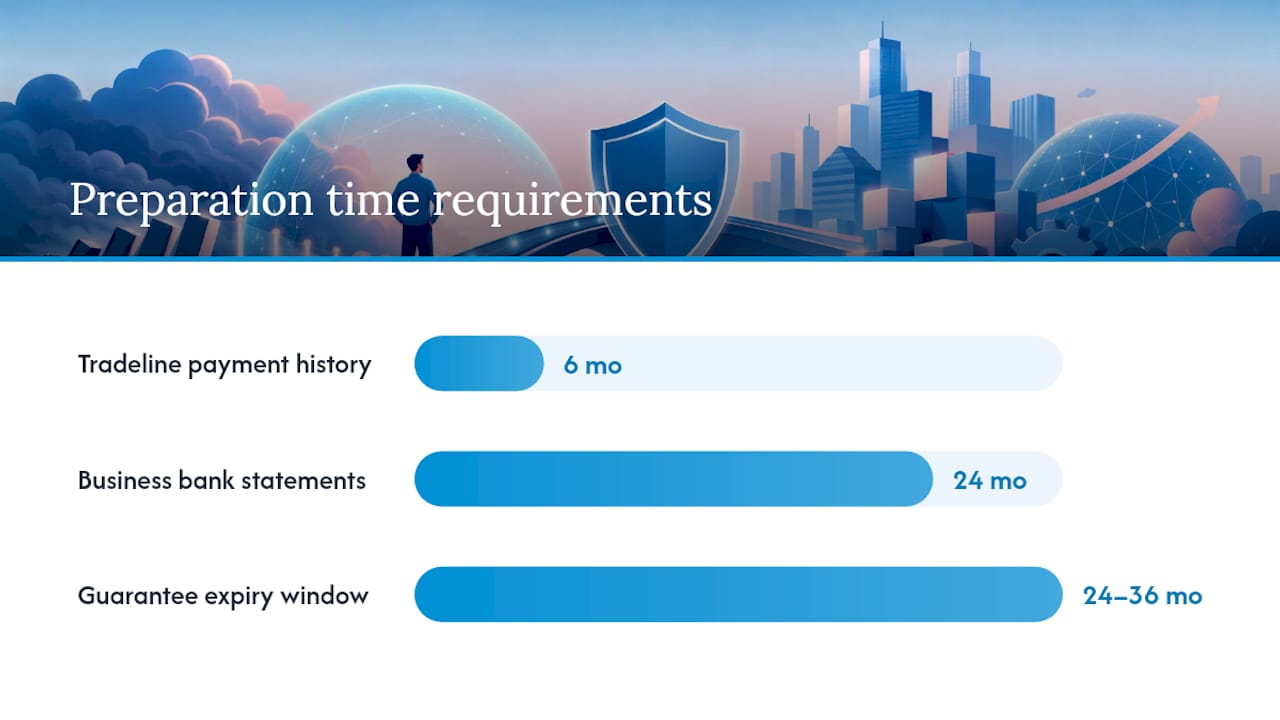
Build your credentials now. Two years of clean business financials, strong bank deposits, and established business credit tradelines will open guarantee-free or limited-guarantee options that are simply unavailable to a business in its first year.
Owners who want fast access to capital without the standard bank runaround have a concrete alternative. Fordhamcapital connects small and medium-sized businesses to a wide network of banks and alternative lenders through a one-page application that does not impact your credit score. Approvals come within 24 hours, and the platform’s lender network includes options ranging from SBA loans to business lines of credit and working capital financing.
For owners focused on limiting personal guarantees, the network matters. Different lenders in Fordhamcapital’s pool have different guarantee requirements, and matching your business profile to the right lender from the start saves negotiation time and reduces the risk of signing terms you didn’t need to accept. Fordhamcapital holds an A+ BBB rating and has funded over $120M, helping clients generate more than $500M in revenue.
Individual outcomes depend on your business’s financials, credit profile, and lender requirements. Fordhamcapital recommends reviewing any guarantee terms with a qualified attorney before signing. To see which funding options your business qualifies for, apply through Fordhamcapital and get a term sheet within 24 hours.
This article provides general information only and is not legal or financial advice. Consult a qualified attorney and your accountant before signing any guarantee or loan agreement.
These are the highest-trust references for verifying guarantee rules and preparing your negotiation:
Bring the Nolo and LegalClarity links to your attorney. Bring the StatementsReady and Finhelp.io links to your lender negotiation. The combination gives you both the legal grounding and the practical leverage to have a productive conversation.
This article is general information, not a substitute for advice from a qualified lawyer. Consult a qualified legal professional about your own circumstances before acting on anything here.
At Fordham Capital, we've made the application process straightforward and reassuring. Dive in and explore your financial options with confidence, knowing there's no impact on your credit score and no obligations. We review your details and offer customized solutions based on what you're looking for.