
Most SBA loans do require collateral, but the SBA’s own rule is that an otherwise-eligible loan should not be declined solely because collateral falls short. Requirements scale with loan size: smaller loans often need none, mid-size loans depend on lender policy, and larger loans get pushed toward “fully secured.” The immediate move is to ask your lender for its written collateral policy and have your repayment documentation ready before you apply.
TL;DR:
- SBA loans under $50,000 often do not require formal collateral, relying instead on personal guarantees and credit history.
- Larger loans, especially those over approximately $350,000, are expected to be fully secured with available assets, including real estate.
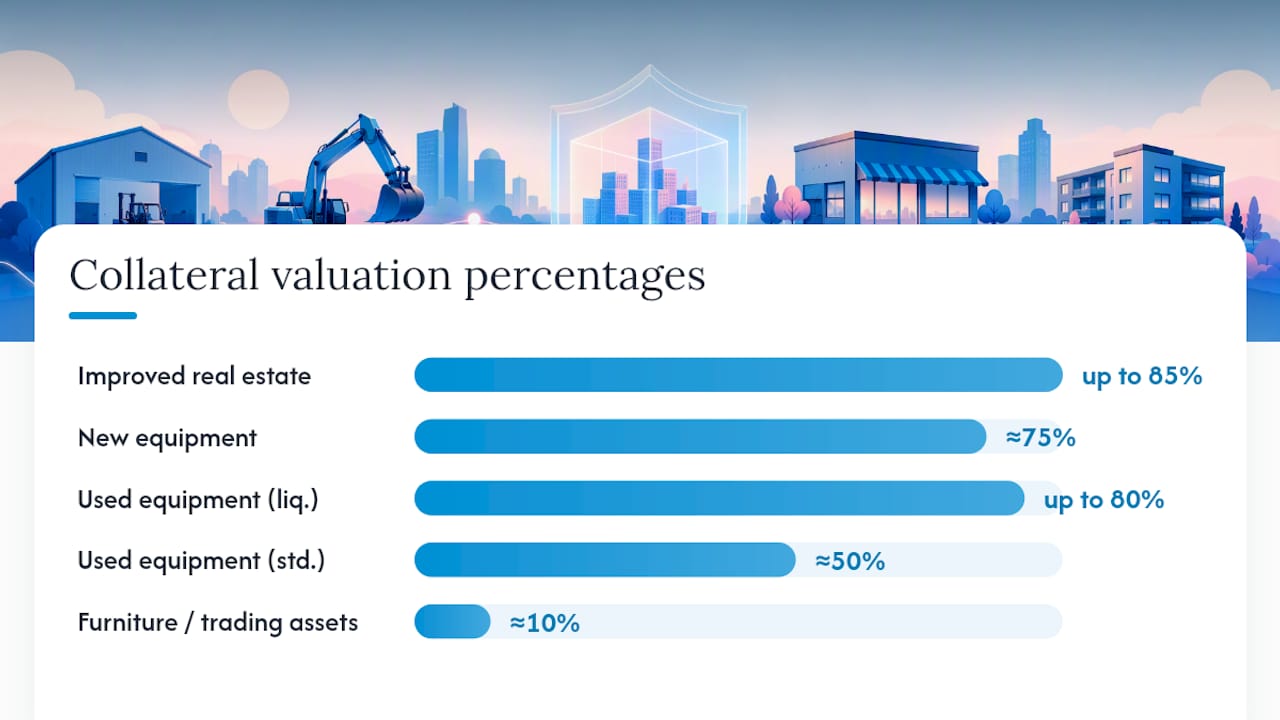
- Lenders credit collateral at discounted values, typically around 75% for new equipment and up to 85% for real estate, which may leave gaps for capital-intensive deals.
- Owners with 20% or more equity in the business must personally guarantee the loan, but liens on personal property are only pursued if business collateral falls short.
- Applying for smaller or micro loans, strengthening cash flow, or working with lenders with delegated authority can improve approval chances with limited collateral.
Collateral rules under SBA guidance aren’t a flat requirement. They shift depending on how much you’re borrowing and which program you use, and understanding your tier tells you what to expect before a lender ever runs your numbers.
Here’s how the tiers generally break down across SBA-backed products:
The SBA guarantee is what makes this workable for borrowers with thin collateral. Because the government backs a portion of the loan, lenders aren’t relying on collateral alone to protect their downside. That’s precisely why SBA guidance states a loan shouldn’t be declined solely for inadequate collateral; the lender still has to document that it pursued available security interests and followed its policy for loans of similar size.
If your business is asset-light, a 504 loan tied to owner-occupied real estate or equipment purchase might actually work in your favor since the asset you’re buying becomes the collateral itself. If you’re short on any hard assets, an Express loan or a microloan through a mission-driven lender may fit better than a standard 7(a) request. Knowing which tier applies to your loan amount lets you have a much more informed conversation with your lender on day one.
Lenders look at three broad buckets of assets when weighing collateral for small business loans, and they don’t all carry equal weight on paper.
Business assets make up the first and most common category:
Real estate is the second bucket, and it’s usually the strongest collateral a lender can secure. Commercial property tied to a 504 project, or any commercial real estate the business owns outright, tends to carry the highest recoverable value of any asset class because it holds resale value better than machinery or inventory.
Personal assets come into play only when business collateral doesn’t cover the gap. That’s when a lender may look at personal real estate, most often a primary residence with meaningful equity, as collateral for small business loans once other options are exhausted. Business equipment and inventory almost always get evaluated first, before a lender ever asks about your house.
Lenders don’t credit collateral at full market value. SOP 50 10 sets specific discount percentages, and running the numbers explains why “fully secured” is harder to hit than it sounds.
Pro Tip: Ask your lender whether they’ll accept an orderly-liquidation appraisal on used equipment.
According to explainers on SOP 50 10 mechanics, typical valuation percentages look like this: new equipment is credited around 75% of purchase price, used equipment at roughly 50% of net book value (or up to 80% with a liquidation appraisal), furniture and trading assets at around 10%, and improved real estate at up to 85% of market value.
Run a quick example. Say a business needs a $500,000 loan and offers $150,000 in used equipment, $100,000 in inventory, and no real estate. That leaves a substantial shortfall on paper, even though the business genuinely owns those assets.
This is exactly the gap the SBA guarantee is designed to cover. Lenders know discounted collateral will rarely match the loan amount on capital-intensive or asset-light deals, so the guarantee lets them approve loans that would otherwise look under secured by a traditional bank’s standards.
Any owner holding 20% or more of the business must personally guarantee the SBA loan, no exceptions. That’s separate from collateral. A guaranty makes you personally liable for repayment; a lien on real estate is a separate security interest a lender only pursues to close a specific collateral shortfall.
Here’s how the two interact in practice:
If you’re worried an SBA lender will “take your house,” the honest answer is: only if your business assets fall meaningfully short, and only up to the amount needed to close that gap, not the full loan balance.
Limited collateral does not automatically disqualify you. It changes which options make sense, and a few concrete moves can improve your position quickly.
Before you sign anything, ask your lender four direct questions: Can I see your written collateral policy? Which of my assets do you count, and at what value? Do you require a third-party appraisal? Will you pursue a lien on my home, and under what conditions? Insights on lender policy vary widely between institutions, and getting a straight answer early prevents surprises at closing.
Closing an SBA loan involves formal paperwork that legally attaches the lender’s claim to your pledged assets. UCC-1 filings secure business collateral like equipment and inventory. Mortgages or deeds of trust secure real estate. Title searches and third-party appraisals confirm ownership and value before the lender finalizes numbers.
A few practical notes on the process:
Collateral shortfalls stall a lot of good businesses that would otherwise qualify. That’s the gap a broad lender network is built to close. The company operates with a one-page application and aims for approvals within 24 hours.
When one lender’s collateral policy is too rigid for your asset mix, a network approach means your file gets seen by multiple lenders with different risk appetites instead of a single yes-or-no gatekeeper. If speed and flexible collateral treatment matter more to you than shopping banks one at a time, that’s worth weighing seriously.
The conventional advice treats collateral like a pass/fail gate: either you have enough assets or you don’t get the loan. That’s not what the rules actually say, and it scares off business owners who’d otherwise qualify.

The research here supports a different read. Collateral is one input lenders weigh, not the deciding factor, and the SBA’s own policy explicitly bars lenders from declining an eligible loan solely for a collateral shortfall. What actually determines your outcome is cash flow, the specific lender’s internal risk appetite, and whether you’re asking the right questions before you apply, not whether your balance sheet is stacked with hard assets.
Where most borrowers go wrong is assuming every lender applies the same standard. They don’t. One bank’s “fully secured” threshold is another’s routine approval. If you take one thing from this: get the lender’s written policy before you spend weeks assembling documentation for a deal they were never going to approve the way you structured it.
— Rob
If a thin balance sheet has kept you from applying, a single-lender rejection doesn’t have to be the end of the road. Fordham Capital connects you with a network of banks and alternative lenders through one application, so a collateral shortfall with one lender doesn’t automatically close the door with all of them.
The process runs on a one-page application, and many borrowers see decisions inside 24 hours without any impact to their credit score just for exploring options. If limited collateral has stalled your search elsewhere, apply now and let a broader lender pool make the call instead of a single bank’s rigid policy.
At Fordham Capital, we've made the application process straightforward and reassuring. Dive in and explore your financial options with confidence, knowing there's no impact on your credit score and no obligations. We review your details and offer customized solutions based on what you're looking for.