If you need a larger loan, a longer repayment term, or you have thinner collateral and a shorter credit history, an SBA loan usually fits better. If you want speed and you already have strong credit and collateral, a conventional loan often costs less and closes faster. Both programs operate under U.S. rules, and the SBA 7(a) and 504 programs sit at the center of most comparisons.
TL;DR:
- SBA 7(a) loans cover working capital, equipment, refinancing, and acquisitions up to $5 million; 504 loans target commercial real estate and heavy equipment.
- Since July 2026, eligible borrowers can combine up to $5 million through each program, reaching $10 million for property, equipment, and working capital.
- SBA applications typically take 30 to 90 days; prepare three years of tax returns and current financial statements, and ask about an eligibility precheck.
- Conventional loans can cost less after SBA guaranty fees, but three to ten year terms raise payments, and lenders demand good credit and collateral.
- Request written APR and fee breakdowns, check prepayment penalties and guarantees, and ask for a realistic closing timeline before choosing an offer.
Before you dig into underwriting details, it helps to see where the two paths diverge on the factors that actually change your monthly payment and your odds of approval.
The SBA itself never lends money directly. A private lender funds the loan, and the SBA guarantees a portion of it, which is what allows more flexible terms. The combined $10 million cap is a 2026 change worth its own explanation, covered further down.
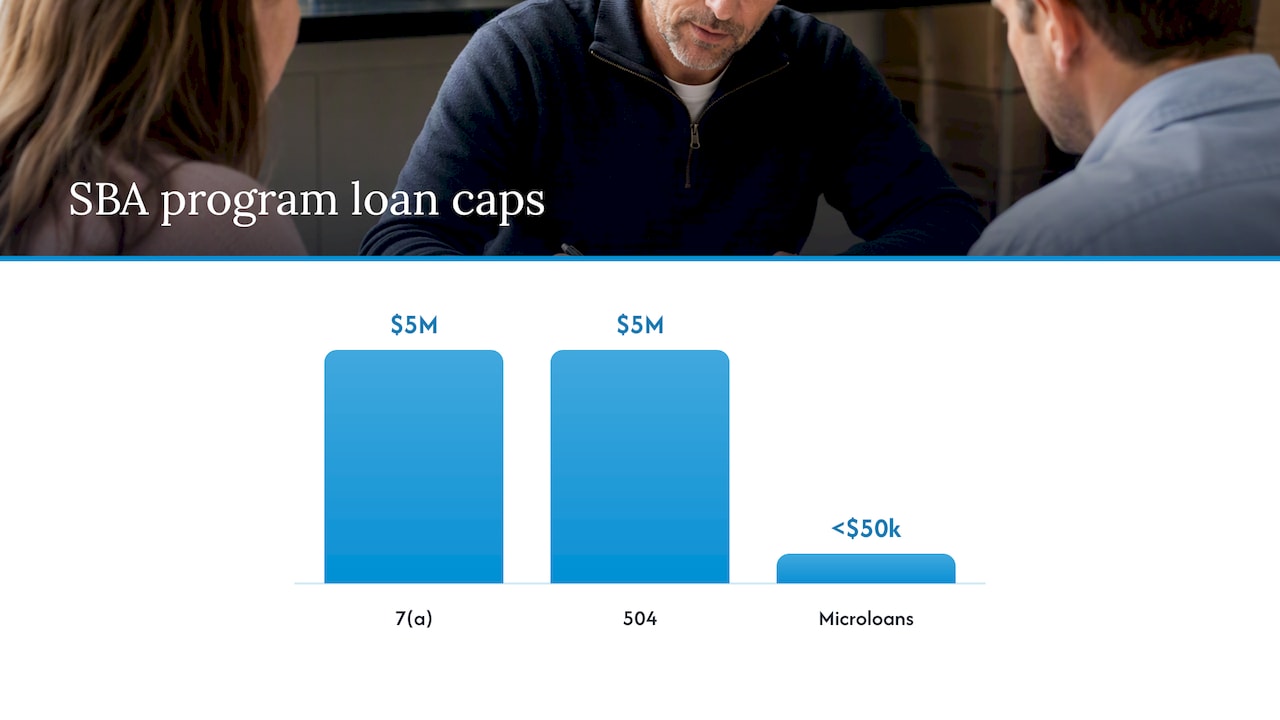
The SBA 7(a) program is the most flexible option, covering working capital, equipment, debt refinancing, and business acquisitions. The 504 program is built specifically for major fixed assets like commercial real estate and heavy equipment, pairing a conventional lender’s first mortgage with a Certified Development Company’s second mortgage. Microloans, capped much lower, serve startups and very small businesses that need a modest injection of capital, often under $50,000.
Eligibility depends on operating in the United States, meeting SBA size standards for your industry, and following ownership rules that determine who must guarantee the loan personally. Guaranty percentages vary: 7(a) loans can carry guaranties up to 85% for loans of $150,000 or less, with rates that scale down for larger amounts. Because the government absorbs part of the risk, lenders can pass along a guaranty fee to the borrower rather than eating that cost themselves.
Interest rates on SBA loans are negotiated between you and the lender but capped by SBA maximums, calculated as a base rate (prime or an optional peg rate) plus a spread. The SBA’s own program page spells out how that structure limits how high a lender can price your loan, which is one reason SBA rates tend to track more predictably than some conventional offers. For specifics on how the March 2026 base-rate rule shifted this math, our detailed breakdown of SBA rate changes walks through the mechanics.
As of July 2026, qualified borrowers can combine a 7(a) loan (up to $5 million) with a 504 loan (up to $5 million) for up to $10 million in total SBA-backed financing. That change matters most for businesses buying real estate or heavy equipment while also needing working capital, since previously those two loan types shared a lower combined ceiling.
Most SBA loans close in 30 to 90 days, slower than conventional financing but often faster than borrowers expect once a complete file is submitted.
An E-Tran pre-check lets a lender test your eligibility against SBA’s electronic system before committing hours to a full underwriting file, which can save weeks when ownership structure or industry classification is unclear. The enhanced Lender Match platform shows you matched lenders in one place and connects borrowers who aren’t matched to local resource partners instead of leaving them stuck.
A conventional business loan comes from a bank, credit union, or online lender with no government guaranty behind it. That means the lender absorbs the full risk of default, and their underwriting reflects it: stronger credit requirements, more collateral, and less patience for thin financials.
Interest rates and terms on conventional loans vary more than SBA products because each lender sets its own risk pricing. Strong borrowers with solid revenue history and collateral can sometimes land better pricing than an SBA loan once guaranty fees are factored in, while weaker borrowers often get turned down outright or priced much higher. Terms typically run shorter too, often 3 to 10 years, which raises the monthly payment compared with an SBA loan of similar size.
Where conventional loans clearly win is speed and simplicity. Fewer forms, no SBA guaranty paperwork, and underwriting that can move in days rather than months make conventional financing attractive when you already qualify comfortably. Established businesses with multiple years of profitability, clean books, and real estate or equipment to pledge tend to be the borrowers banks favor most.
Conventional financing usually costs less overall when you have strong credit and don’t need the extended terms SBA offers. It tends to cost more, or simply isn’t available, when your business is newer, thinly capitalized, or short on hard collateral.
The honest trade-off comes down to what you’re optimizing for: cost and flexibility, or speed and simplicity.
Example A: A growing restaurant group wants to buy its building instead of renting, a $2.5 million purchase. Limited free cash and a desire to preserve capital for buildout point toward an SBA 504 loan, which pairs low down payment requirements with a long amortization schedule that keeps monthly payments manageable.
Example B: An established SaaS company with healthy recurring revenue needs $300,000 in short-term working capital to bridge a seasonal dip. Strong financials and no real estate purchase involved make a conventional term loan or line of credit the faster, cheaper choice, since there’s no need to pay SBA guaranty fees for a short-term need.
Pros and cons mirror these examples closely: SBA wins on loan size, term length, and accessibility for less-established borrowers, while conventional wins on speed, simplicity, and often total cost for borrowers who qualify easily.
A rate quote alone tells you almost nothing. Compare offers using the same checklist every time so you’re not surprised later.
Pro Tip: Request the fee schedule in writing before you submit any application. A lender unwilling to put fees on paper is a lender to walk away from.
Red flags are usually easy to spot once you know what to look for: no written fee schedule, pressure to sign before you’ve reviewed terms, or a lender whose credentials you can’t verify through SBA Lender Match or state licensing records. Reviewing how lenders evaluate loan approval factors before you apply also helps you present a stronger file from the start.
The SBA’s move to allow up to $10 million in combined 7(a) and 504 financing as of July 2026 mainly benefits businesses financing large real estate or equipment purchases alongside working capital needs, letting them avoid splitting financing across unrelated loan products.
Speed matters, but financing that actually fits your business tends to outperform financing that simply closes fastest. For borrowers piecing together a 504 structure, practical CDC guidance on maximizing the new combined cap is worth reading before you approach a lender.
The comparison isn’t really SBA versus conventional. It’s your balance sheet versus your timeline. If your collateral or credit can’t yet support a conventional lender’s full risk appetite, SBA financing buys you time and better terms in exchange for more paperwork. If you already qualify easily, don’t pay for a guaranty you don’t need. Either way, get APR quotes from more than one lender and ask every one of them whether they can run an E-Tran pre-check before you commit weeks to an application.
— Rob
We connect small and medium-sized businesses to a network of banks and alternative lenders through a single one-page application, covering SBA loans, lines of credit, and working capital, without affecting your credit score to check what you qualify for.
If you’re ready to see what you qualify for, start your application with Fordham Capital and compare real offers before committing to one path.
This article is general information, not a substitute for advice from a qualified financial advisor. Consult a qualified financial professional about your own circumstances before acting on anything here.
Yes, $1 million is well within SBA 7(a) limits, which go up to $5 million, and combined 7(a) and 504 financing can now reach $10 million for qualifying borrowers. Your actual approved amount depends on your lender’s underwriting and your business’s financials.
SBA loans typically take 30 to 90 days to close, require extensive documentation, and come with guaranty fees that lenders can pass on to you. They also usually require a personal guarantee from owners holding significant equity in the business.
SBA loans are designed for business purposes, so you cannot use one to buy a personal residence. You can use an SBA 504 loan to purchase commercial real estate that your business occupies and operates from.
Common disqualifiers include operating outside the United States, exceeding your industry’s SBA size standard, being delinquent on an existing government loan, or working in a restricted industry such as lending or gambling. Severe credit issues or an inability to demonstrate repayment ability can also derail approval even when you meet basic eligibility.
At Fordham Capital, we've made the application process straightforward and reassuring. Dive in and explore your financial options with confidence, knowing there's no impact on your credit score and no obligations. We review your details and offer customized solutions based on what you're looking for.