
For real estate purchases or major renovations, SBA 7(a) or 504 loans offer the lowest long-term cost. For everyday cash flow and seasonal inventory, a business line of credit or inventory financing works better. When cash is needed within days, alternative lenders and marketplaces like Fordham Capital can move faster, often approving within 24 to 72 hours versus several weeks for SBA products.
TL;DR:
- SBA 7(a) and 504 loans are most cost-effective for real estate and fixed asset purchases but require longer approval times and detailed documentation.
- Alternative financing options like online loans or revenue-based financing can approve within days but carry higher costs and looser eligibility criteria.
- Fast application processes, such as one-page forms and lender-matching platforms, significantly reduce approval times, making them ideal for urgent cash needs.
- Borrowers should compare APRs instead of just interest rates, considering fees and repayment terms to understand true costs.
- Eligibility depends more on cash flow, time in business, and collateral than solely on credit scores, with thorough preparation improving approval chances.
Retail store financing breaks down into a handful of clear categories, and matching the right one to your actual need saves both time and money.
SBA 7(a) loans top the list for flexibility. They fund up to $5 million with terms up to 25 years for real estate and 10 years for working capital, which makes them ideal for a store buying its building or refinancing expensive debt.
SBA 504 loans work specifically for fixed assets. If you’re buying commercial property or heavy equipment, this program pairs a bank loan with a Certified Development Company loan for a lower blended rate.
Microloans cap out at $50,000 and average closer to $13,000. They fit new retailers or small operations that don’t need six figures but do need a first credit relationship.
Traditional bank term loans reward businesses with strong financials and multiple years of tax returns. Banks offer competitive rates but underwrite conservatively.
Lines of credit, inventory financing, and equipment loans solve different short-term problems. A line of credit covers cash flow gaps. Inventory financing ties directly to stock purchases. Equipment loans fund fixtures, registers, or delivery vehicles.
Alternative fast funding includes:
Each alternative trades a higher cost for speed and looser eligibility, which makes them useful for urgent gaps but expensive as a long-term strategy.
Start with purpose, not product. A store owner chasing a location buildout has different needs than one covering a slow February.
Run through this checklist before applying anywhere:
Have these documents ready: tax returns (two to three years), profit and loss statements, bank statements (three to six months), lease or purchase agreements, and business ownership documentation. Lenders will also weigh the five C’s of credit: character, capacity, capital, collateral, and conditions.
Ask every lender directly about origination fees, prepayment penalties, and whether the rate is fixed or variable. Red flags include vague fee disclosures, pressure to sign same-day, and any lender unwilling to state the APR in writing.
Pro Tip: Negotiate origination fees before signing, not after. Many lenders will shave a point or two off the fee if you simply ask, especially when you have a competing offer in hand.

The application process follows a predictable path: prequalification, document submission, lender matching, underwriting, and funding. What changes dramatically is the timeline.
Online term loans and short-term alternative funding can close in within 24 to 72 hours once documents are submitted. SBA 7(a) loans typically take two to six weeks because of the added documentation and government backing requirements. SBA 504 loans, tied to real estate, often run longer still.
A lender-match marketplace shortens this timeline by submitting your profile to multiple banks and alternative lenders at once instead of you applying to each one individually. A one-page application, the kind Fordham Capital uses, speeds this further by reducing the intake step to a single form rather than a stack of separate applications.
Have these ready before you start to avoid delays:
Missing paperwork is the single most common reason applications stall past their expected timeline.
Rate and APR are not the same number. APR folds in origination fees, closing costs, and any recurring charges, which is why two loans with identical “rates” can cost very different amounts.
Consider $50,000 borrowed two ways:
A 5-year SBA-style loan at a lower rate might run monthly payments in the $950 to $1,050 range, with total repayment landing somewhere between $57,000 and $63,000 depending on fees.
A 2-year short-term online loan at a higher rate could carry monthly payments closer to $2,300 to $2,600, with total repayment reaching $55,000 to $62,000 despite the shorter term, because the compressed timeline concentrates the cost.
The takeaway on cost: shorter terms mean higher monthly payments even when total repayment looks similar, so match the term to your cash flow, not just the sticker rate.
SBA-backed financing remains one of the most cost-effective routes for retailers who can meet eligibility and wait through underwriting.
Eligibility generally requires a for-profit business, reasonable owner equity invested, and demonstrated ability to repay. Lenders also look closely at what the funds will actually cover, so it helps to understand permitted uses of SBA loan proceeds before applying.
The SBA’s own program pages offer counseling and a Lender Match tool that connects borrowers directly to SBA-approved lenders, which removes much of the guesswork from finding the right bank. Reviewing SBA loan requirements ahead of time also cuts down on wasted applications.
Most retail owners assume the loan decision comes down to credit score. It doesn’t, not entirely. Lenders weigh time in business and cash flow consistency just as heavily, sometimes more, because a strong credit score with erratic monthly revenue still reads as risk on paper.
The gap between what financing guides promise and what actually happens in underwriting is real. A guide will tell you SBA loans have “competitive rates.” What it won’t tell you is that the paperwork burden filters out a lot of otherwise qualified retailers who simply run out of patience or miss a document deadline. That’s where a faster, broader-access path earns its place, not as a replacement for SBA financing, but as a practical option when timing or documentation makes the traditional route impractical.
Some lender models reflect that reality by offering a one-page application and access to a wide lender network, specifically for retailers who don’t fit neatly into a single bank’s underwriting box. For a business with two years of solid revenue but imperfect paperwork, broader access often matters more than shaving half a point off an interest rate.
— Rob
Compared to filling out five separate bank applications or waiting weeks on an SBA decision, a one-page application can get your profile in front of a wide network of banks and alternative lenders at once, with approvals possible quickly and no impact to your credit score just for applying.
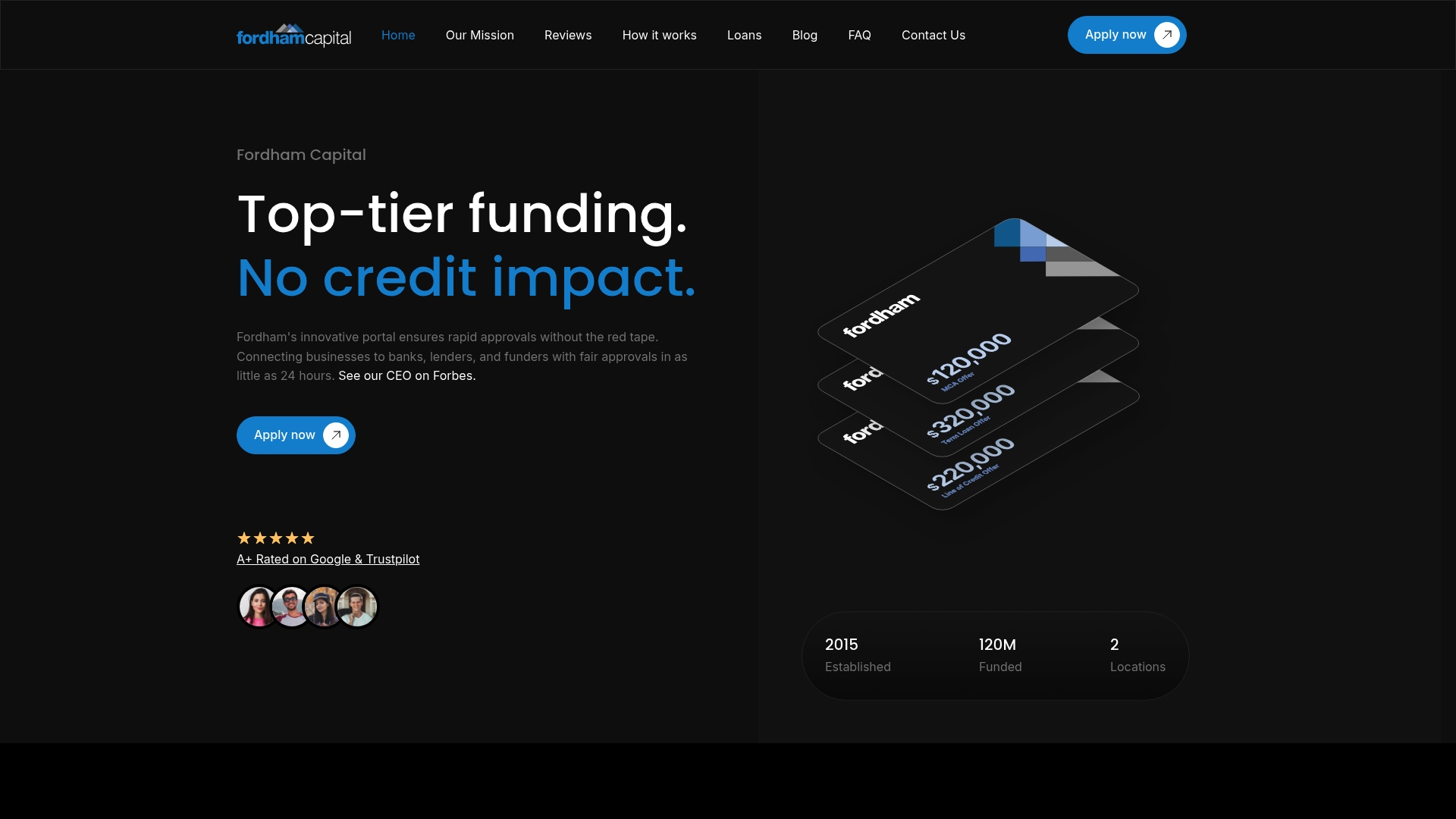
The process is simple: submit the one-page application, share basic financial documents (recent bank statements, a P&L, and tax returns if available), and get matched with lenders suited to your situation. This works well for retail owners who need working capital fast, want to compare multiple offers without multiple hard credit pulls, or don’t have the months an SBA loan can require.
If you’re ready to see what you qualify for, apply now and get matched with lenders who understand retail financing.
For SBA program details, loan caps, and Lender Match, go straight to the SBA’s loan programs page and its 7(a) loan overview. For industry context on retail trends, the Bureau of Labor Statistics’ retail trade data tracks employment and sector activity. The Consumer Financial Protection Bureau’s credit trends reports offer additional insight into lending conditions affecting small business borrowers.
This article is general information, not a substitute for advice from a qualified financial advisor. Consult a qualified financial professional about your own circumstances before acting on anything here.
Bridging now and refinancing later is a legitimate strategy, not a red flag. A retailer facing a seasonal inventory crunch might take a short-term advance to cover the immediate gap, then refinance into a lower-cost SBA loan once the busy season settles and financials look stronger.
Other paths worth knowing:
The danger in combining sources is stacking too many covenants and overlapping payments at once. Before layering a second loan on top of an existing one, check what non-bank financing structures actually require in terms of repayment priority.
At Fordham Capital, we've made the application process straightforward and reassuring. Dive in and explore your financial options with confidence, knowing there's no impact on your credit score and no obligations. We review your details and offer customized solutions based on what you're looking for.