

A merchant cash advance (MCA) is a lump sum of cash a business receives in exchange for a slice of its future sales, repaid daily or weekly as a fixed percentage of revenue rather than a monthly loan payment. The cost is quoted as a factor rate, not an interest rate. That distinction matters more than most owners realize before they sign.
Here’s the quick version:
A merchant cash advance trades speed and lenient underwriting for a flat factor-rate fee that can translate into a triple-digit effective APR depending on how fast you repay it.
| Point | Details |
|---|---|
| MCA is a sale, not a loan | Repayment comes from a cut of future sales, which is why usury caps often don’t apply. |
| Cost is fixed, not annualized | A 1.2 to 1.3 factor rate means the same total fee no matter how fast you pay it off. |
| Faster payoff raises effective APR | Paying back sooner compresses the same fee into less time, pushing the annualized cost higher. |
| Watch contract red flags | Confirm holdback percentage, personal guarantee terms, and default triggers before signing. |
| Compare before you commit | Fordham Capital’s lender network lets you weigh MCA offers against loans and credit lines in one application. |
An MCA provider hands you a lump sum today and collects it back through a cut of your future sales. Structurally, that’s a purchase of receivables, not a loan, and that one legal distinction shapes almost everything else about how MCAs are sold and regulated.
There are two common repayment mechanisms, and the difference actually matters for your cash flow:
The card-split model flexes with your revenue, which is gentler during slow stretches. Fixed ACH is predictable but unforgiving. A bad week still means the same withdrawal, which is exactly when cash-flow strain shows up.
Terms typically run Three to 18 months, occasionally stretching to 24 months for larger advances. That’s short compared to a term loan, and it’s a big part of why the daily or weekly payment amount can feel aggressive relative to a traditional monthly note.
The receivables-sale structure has a legal consequence worth understanding before you sign anything. Because many MCA contracts are written as a sale of future receivables rather than a loan, courts have in some cases declined to apply usury caps or standard lending disclosure rules to them. That’s why you won’t see a standardized APR on most MCA offers the way you would on a bank term sheet. The cost is real, but the framework used to disclose it is looser than what banks operate under.
Providers price MCAs with a factor rate instead of an interest rate, and that single choice is what makes MCAs so hard to compare against other financing. A factor rate of 1.2 on a $20,000 advance means you repay $24,000 total, full stop, regardless of how fast you pay it back.
That flat structure is the catch. The dollar amount you owe doesn’t shrink if you repay faster, which means the same $4,000 fee gets squeezed into a shorter window, driving the effective annualized cost up rather than down.
Pro Tip: Never compare a factor rate directly to a loan’s APR. Convert everything to total repayment and time frame first. A factor rate is a flat multiplier; APR is annualized and compounding, so a “1.2 factor rate” and “20% APR” sound similar but usually are not.
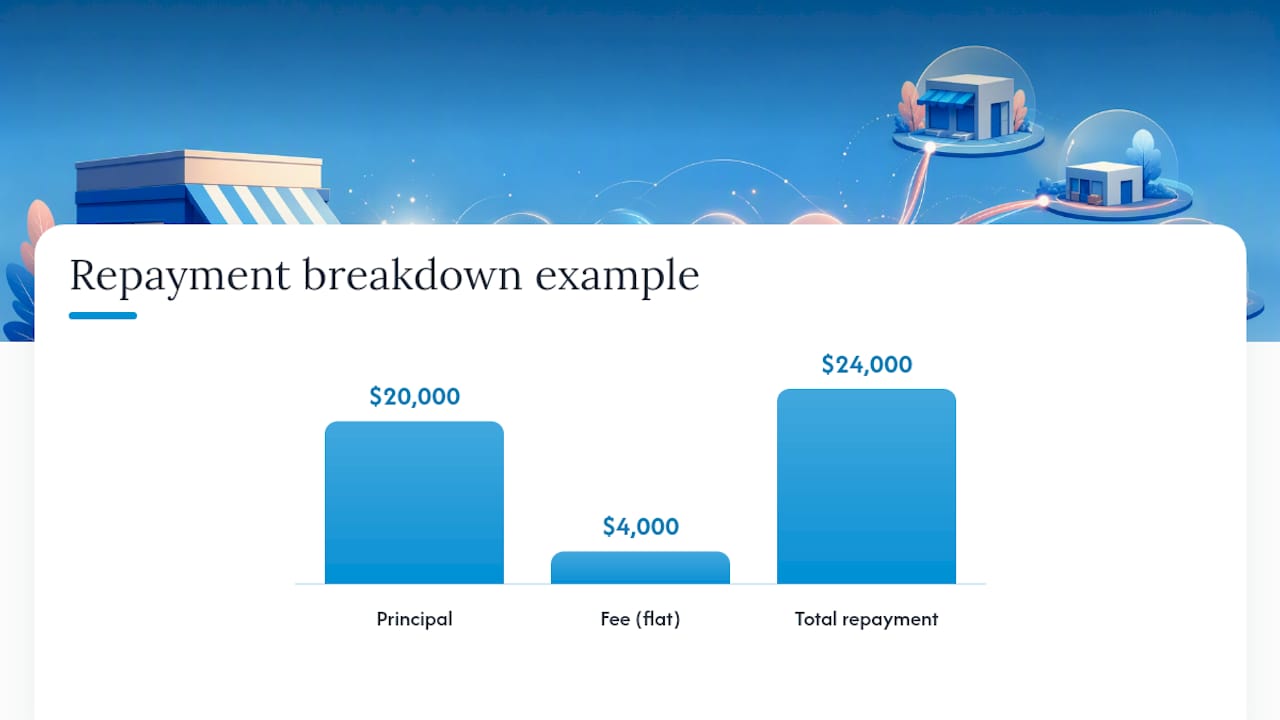
Here’s how the math shakes out on that same $20,000 advance at a 1.2 factor rate:
The fee stays fixed at $4,000 either way. Compress the payoff window and the annualized rate roughly doubles, because you’re paying the same fee over half the time. That’s the mechanic providers rarely spell out on their marketing pages.
Before you sign, run through this checklist of terms that quietly change your real cost:
Effective APRs on MCAs commonly run far higher than traditional small-business loans, sometimes into triple digits depending on the factor rate and how quickly the balance gets collected. That’s the number that matters, not the factor rate printed on the offer sheet.
MCAs earn their popularity from speed and access, not from being cheap. Approval often hinges on your processing volume and bank deposit history rather than your personal credit score, which opens the door for businesses that a bank would turn away outright.
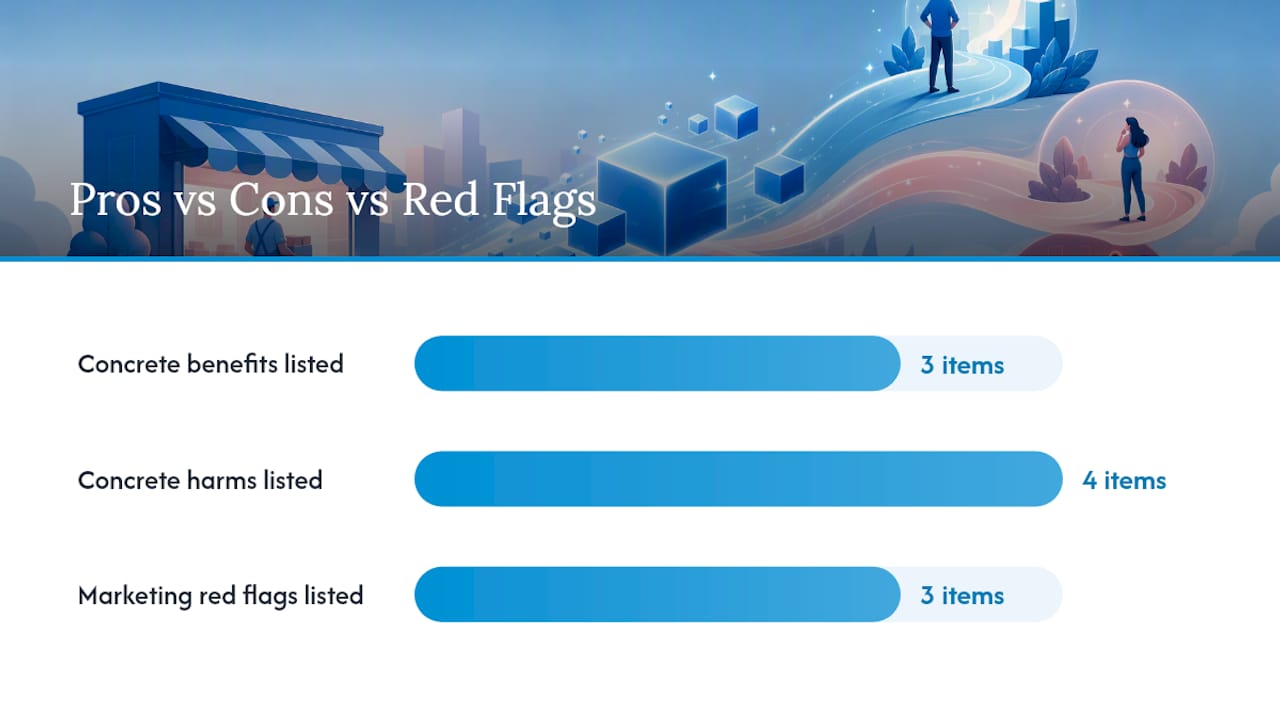
What’s genuinely good about them:
What can genuinely hurt you:
Watch for red flags in how an offer is marketed: pressure to sign within hours, refusal to show the full contract before you commit, or a broker who won’t explain the holdback percentage in plain terms. Predatory practices in this space are a documented concern, and the lack of uniform disclosure rules means the burden of due diligence falls on you. Our own breakdown of MCA suitability walks through more of these contract details if you want the deeper version.
An MCA is rarely the cheapest option, just the fastest. If you have any runway to shop around, these usually beat it on cost:
An MCA still makes sense when speed matters more than cost, or when your credit profile rules out the cheaper options above. Our overview of non-bank financing types breaks down where each option fits.
Applications are built for speed, which is the whole point of the product. Most providers ask for:
Approval decisions often come back within a day, with funding following within 24 to 48 hours after that. Before you sign, confirm four things in writing: the exact holdback percentage or fixed debit amount, the factor rate and total repayment figure, whether a personal guarantee is attached, and what triggers default. Our guide on choosing the right lender covers the diligence questions worth asking before you accept any offer.
Take a $30,000 advance at a 1.3 factor rate. Total repayment is fixed at $39,000, a $9,000 fee, no matter how fast or slow you pay it back.
The $9,000 fee never moves. Only the time frame does, and that’s what swings the annualized cost so dramatically. Run this same table with your own advance amount and factor rate before accepting any offer, then compare the resulting APR against a term loan or line of credit priced over that same window.
Small business owners rarely lose money on an MCA because they misunderstood the concept. They lose money because they accepted the first offer without comparing it against anything else. That gap between what an MCA promises (speed, easy approval) and what it can cost if you don’t shop around is where real harm happens.
Fordham Capital holds an A+ BBB rating and has funded over $120 million, helping clients generate more than $500 million in revenue, by running applicants through a network of banks and alternative lenders instead of a single offer. Seeing multiple structures side by side, holdback percentages, factor rates, term lengths, is the single best defense against a bad contract.
You don’t have to accept the first MCA offer that lands in your inbox. Fordham Capital’s one-page application puts you in front of a network of banks and alternative lenders at once, so you can weigh a merchant cash advance against a term loan, line of credit, or SBA option side by side, with no impact to your credit score to look.
Most applicants get a decision within 24 hours, and funding often follows fast once you accept an offer. There’s no pressure to take the first number you see. If a merchant cash advance turns out to be the right fit for your sales volume and timeline, you’ll know it because you compared it against the alternatives, not because it was the only offer on the table. Apply now to see what your business qualifies for, or visit Fordham Capital to learn more about how the marketplace works.
Is a merchant cash advance a loan? Not legally, in most cases. It’s structured as a sale of future receivables, which is why many MCA contracts fall outside standard usury law protections that apply to traditional loans.
What’s a typical factor rate for a merchant cash advance? Factor rates commonly range from 1.1 to 1.5, meaning you repay 10% to 50% more than the amount advanced, regardless of repayment speed.
How fast do merchant cash advances get repaid? Most run Three to 18 months, with daily or weekly withdrawals rather than a single monthly payment.
What’s the difference between an MCA and a business line of credit? A line of credit charges interest only on what you draw and typically costs far less; an MCA charges a flat fee regardless of how quickly you repay. Our line of credit guide breaks down when each fits.
Can a merchant cash advance hurt my personal credit? Approval usually doesn’t require a hard credit pull, but a personal guarantee attached to the contract can put your personal assets and credit at risk if the business defaults.
At Fordham Capital, we've made the application process straightforward and reassuring. Dive in and explore your financial options with confidence, knowing there's no impact on your credit score and no obligations. We review your details and offer customized solutions based on what you're looking for.



.jpg)

