
The draw period for a business line of credit is the contractual window during which a business can borrow up to its approved limit, typically 1 to 5 years. It ends one of three ways: renewal, conversion into a fixed-term loan, or reduction or closure by the lender. Miss the transition and a manageable revolving balance can turn into a fixed monthly payment you didn’t budget for.
TL;DR:
- Most draw periods for business lines of credit last between 1 and 5 years, with shorter periods common for unsecured or smaller lines, and longer for secured assets.
- When the draw period ends, the balance usually converts into a fixed-term loan or the line is renewed; lenders may also reduce or close the line based on financial performance.
- Business owners should prepare financial statements and repayment plans 6 to 12 months before expiration to improve renewal chances and consider refinancing if payments become unmanageable.
- Relying on a single lender creates risk, while maintaining a network of lenders spreads exposure and provides more options during draw period transitions.
- Acting early and exploring multiple options through a broad lender network can help businesses avoid surprises and secure better terms when their draw period ends.
During the draw period, your business can pull funds up to the credit limit whenever it needs cash, repay some or all of it, and draw again. Interest accrues only on the amount actually borrowed, not the full limit, according to SBA guidance on working capital tools. That’s the core distinction between a line of credit and a term loan: you’re not stuck paying interest on money sitting unused.
Most lenders offer two payment structures during the draw period. Some require interest-only payments, which keeps monthly obligations low but means the principal balance never shrinks unless you pay it down voluntarily. Others require principal-plus-interest, amortizing the balance gradually even while the line stays open for redraws.
The repayment period is a different phase entirely. Once the draw period ends, many agreements shift into scheduled repayment, sometimes with the balance converting into a fixed-term loan, according to Stripe’s overview of business lines of credit. Before signing, read the agreement for a few specific clauses:
Business line of credit draw periods commonly run 1 to 5 years, according to U.S. Bank’s business lending resources. Shorter windows of 6 to 12 months show up on smaller, unsecured lines or newer-business products where the lender wants more frequent reviews. Longer structures, closer to the 5-year mark, tend to appear on secured lines backed by receivables or inventory.
SBA-guaranteed products give useful reference points even if your line isn’t SBA-backed. SBA Express and CAPLines permit revolving structures with defined limits and guarantee percentages, and SBA processing often runs 5 to 10 business days. The newer 7(a) Working Capital Pilot Program goes further, allowing maturities up to five years with tiered guaranty percentages on lines that can reach several million dollars, per SBA’s WCP program details.
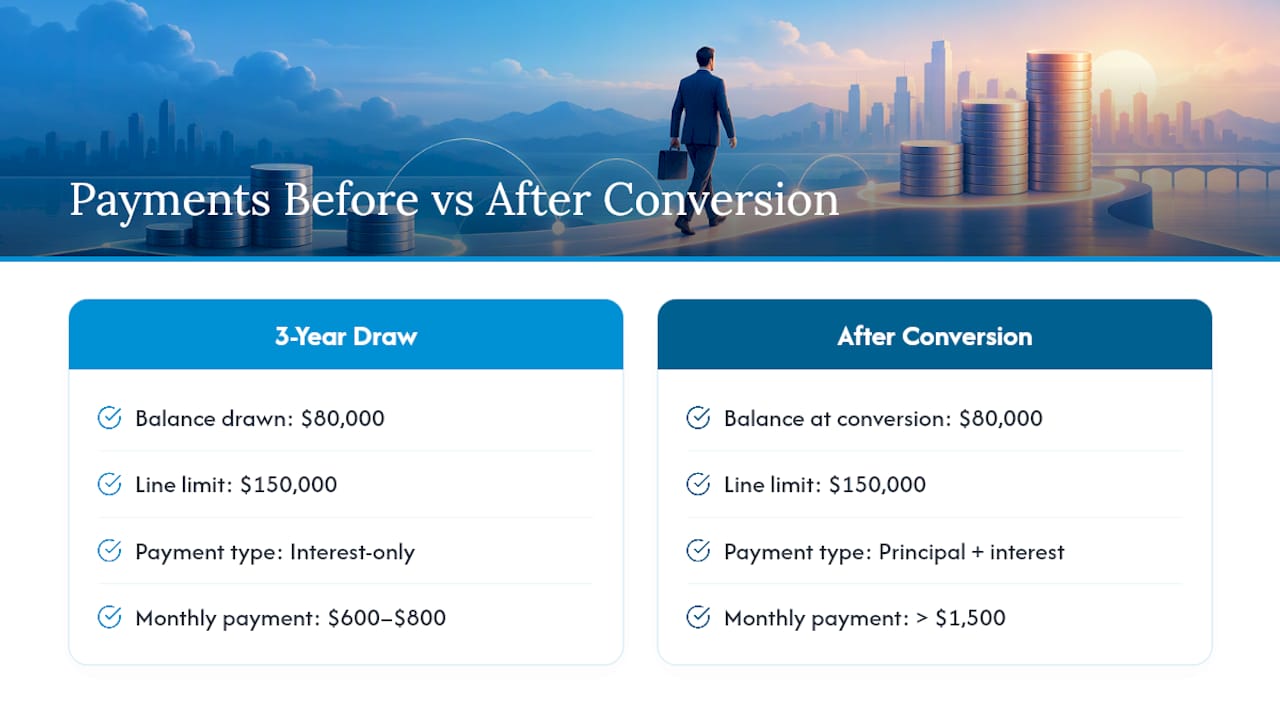
Here’s how it plays out numerically. A business draws $80,000 against a $150,000 line during a 3-year draw period, paying interest-only at roughly $600 to $800 a month depending on the rate and balance. At month 36, the line converts to a 5-year term schedule, and that same balance now carries principal plus interest, often pushing the payment past $1,500 a month.
Lenders generally handle draw-period expiration one of four ways, and which one you get depends heavily on how your business has performed since approval.
Lenders don’t make these calls arbitrarily. Annual reviews look at revenue trends, debt service coverage, and whether required financial statements arrived on time. A line that’s been reliable for three years can still get reduced if the underlying business weakened, since lenders reserve the right to reassess risk at each review cycle. The cash-flow hit from an unexpected term-out or reduction is real: a business that planned around revolving access suddenly owes a fixed payment or loses working capital it was counting on.
Start planning 6 to 12 months before your draw period ends, not the month it happens. Lenders that see engaged, prepared borrowers are far more likely to renew on favorable terms than lenders reacting to a last-minute scramble.
Get these ready early:
From there, weigh your paths. Refinancing into a new line with better terms makes sense if your revenue has grown since approval. Converting voluntarily to a term loan can make sense if you’d rather lock in a predictable payment than risk a lender-forced conversion later. Either way, SBA guidance on business credit lines recommends treating a line as flexible insurance rather than a guaranteed permanent asset, which means keeping relationships with more than one lender so a single reduction doesn’t stall your operations.
Short-term cash management matters here too. If a term-out looks likely, start building a reserve now that can absorb the higher payment for the first two or three months.
Pro Tip: Run the math on your term-out payment before the lender does it for you. Take your current outstanding balance, divide it across a 3 to 5 year amortization at your line’s rate, and compare that number to your current interest-only payment. If the gap looks unmanageable, that’s your signal to start refinancing conversations now, not later.
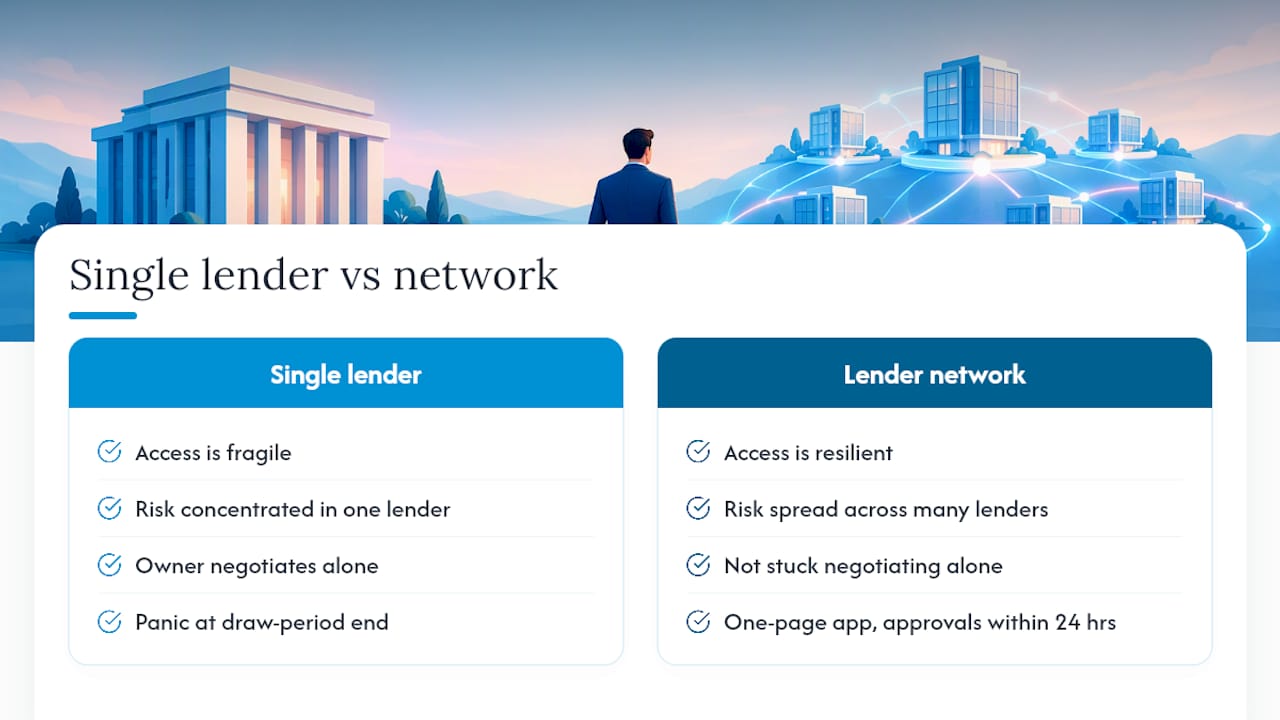
Most business owners treat their line of credit as a static, one-lender relationship, and that’s exactly what creates panic at draw-period end. Fordham Capital’s approach starts from a different assumption: access to one lender is fragile, access to a network isn’t. A one-page application and approvals within 24 hours mean a business facing an unexpected reduction or term-out isn’t stuck negotiating alone with the lender that just tightened its terms.
This marketplace model spreads risk across many lenders rather than concentrating it in one relationship. For owners who want a deeper look at how that network structure reduces single-lender exposure, our guide on lender network benefits breaks down the mechanics further.
— Rob
If your draw period is closing in the next year and you’re not sure whether renewal, term-out, or refinancing is your best move, waiting for the lender’s letter is the wrong strategy. This service connects your business to a wide network of banks and alternative lenders, so instead of negotiating against one institution’s take on your risk profile, you get multiple options on the table at once, often within 24 hours of applying.
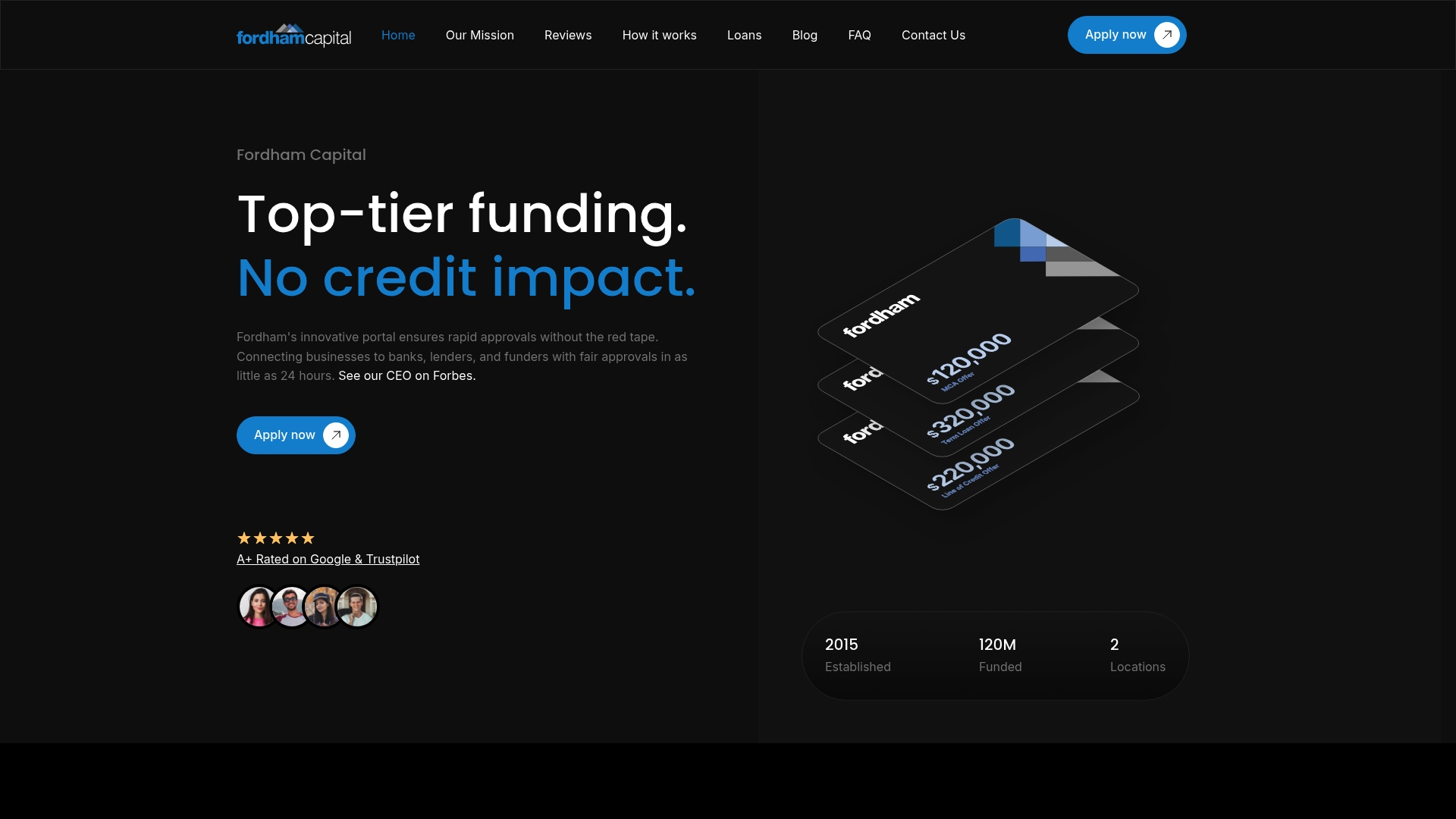
The process starts with a single one-page application, without collateral requirements or impact to your credit score just for exploring your options. If you’re already gathering financials for your current lender’s review, that same paperwork gets you most of the way to a Fordham Capital application. Explore current line of credit and working capital options or go straight to the application page to see what a competing offer looks like before your existing draw period runs out.
Most business line of credit draw periods run 1 to 5 years, though some smaller or unsecured lines use shorter 6 to 12 month windows. SBA structures like the Working Capital Pilot Program allow maturities up to 60 months.
Your outstanding balance either converts to a fixed-term loan with scheduled principal and interest payments, or the lender renews the draw period under new terms. Some lenders reduce or close the line entirely if financial reviews show increased risk.
Yes, and starting the conversation 6 to 12 months early gives you the most leverage. Lenders respond better to prepared borrowers with current financials than to last-minute renewal requests.
Fordham Capital connects businesses to a network of lenders offering lines of credit priced around 1 to 3% per month, along with SBA loans and working capital products, all through a one-page application with approvals often within 24 hours. Current rates and terms are available on the Fordham Capital site.
Relying on one lender concentrates risk, since access can shrink or disappear after a routine annual review. The SBA recommends treating credit lines as flexible tools and maintaining relationships with more than one lender to protect cash flow.
At Fordham Capital, we've made the application process straightforward and reassuring. Dive in and explore your financial options with confidence, knowing there's no impact on your credit score and no obligations. We review your details and offer customized solutions based on what you're looking for.