
Yes, most startups can qualify for a business line of credit, though the path depends on personal credit, revenue, and whether you go through a bank, an SBA lender, or an online marketplace. Online platforms often approve in days, not weeks. Start by gathering your last three to six months of bank statements and a basic profit and loss statement before you apply anywhere.
TL;DR:
- Online lenders can approve startup lines of credit within days, but their interest rates tend to be higher than traditional banks.
- Eligibility often relies heavily on personal credit scores, verified revenue, short operating history, and sometimes collateral or a co-signer.
- Revolving lines are suitable for managing cash flow gaps and seasonal inventory but are not designed for long-term investments or property purchases.
- Preparing financial documents, linking bank accounts, and shopping through marketplaces can significantly speed up approval and improve terms.
- Interest is charged only on drawn amounts, and maintaining a draw below 50% of the limit, along with timely payments, helps control costs.
A business line of credit works like a credit card built for operations. You get approved for a maximum limit, draw against it when you need cash, and pay interest only on the amount you’ve actually pulled out, not the whole limit sitting unused. Once you repay what you drew, that credit becomes available again. Most lines run on a cycle: a draw period where you can pull funds, followed by a repayment period, sometimes overlapping, sometimes sequential depending on the lender.
That structure makes it fundamentally different from a term loan, where you get a lump sum upfront and start paying it back on a fixed schedule whether you’ve used the money productively or not. A line of credit is built for irregular need.
Here’s where it actually earns its keep for a young company:
What a line of credit is not built for: buying a building, financing a major equipment purchase, or funding a multi-year expansion plan. Those situations call for term loans or equipment financing, where a fixed rate and longer repayment window make more sense than revolving debt.
One thing worth clearing up early: “startup business line of credit” is largely a marketing label, not a distinct underwriting category. Forbes Advisor notes that lenders generally apply the same standard business line criteria to a six-month-old company as they would to a five-year-old one. The word “startup” in a product name usually signals that the lender is comfortable with shorter operating histories, not that there’s some separate, gentler approval process. Knowing that changes how you shop: you’re not looking for a special startup product, you’re looking for a lender whose standard thresholds you can actually clear.
Not every line of credit looks the same, and the type you pursue should match your collateral, revenue stage, and how fast you need the money.
Unsecured lines of credit. No collateral required, but expect a higher interest rate and a personal guarantee almost every time. Lenders offset the lack of collateral by leaning harder on your personal credit score and cash flow history.
Secured lines of credit. You pledge collateral, inventory, equipment, receivables, sometimes a cash deposit, in exchange for a lower rate and often a higher limit. If your business has few assets yet, this route can be a nonstarter, but if you’re sitting on equipment or strong receivables, it’s usually the cheaper option.
SBA CAPLines. These are working capital lines backed by the SBA’s 7(a) program, specifically built for short-term and seasonal cash needs. CAPLines come through participating banks and credit unions rather than the SBA directly, and you can find a lender through the SBA’s lender directory. The tradeoff is process: SBA-backed products carry more paperwork and a slower timeline than an online line, but the rates and terms are usually more favorable.
Invoice-based or receivables financing. If you invoice other businesses and have consistent, verifiable receivables, some lenders will extend a revolving line against those unpaid invoices. This helps companies that are asset-light but revenue-rich, agencies, staffing firms, B2B service providers, where the invoice itself becomes the collateral.
Online revolving lines through marketplaces. Rather than applying lender by lender, a marketplace platform takes one application and routes it to multiple lenders whose risk appetite matches your profile. This tends to be the fastest route for a company still building its credit file, since the platform can match you with a lender who accepts thinner financials than a traditional bank would.
Lenders look at a short list of factors, and understanding which ones carry the most weight helps you figure out where you actually stand before you waste time on an application that’s going to get declined.
Personal credit score. For a young business, your personal credit file often substitutes for a business credit history that doesn’t exist yet. Lenders commonly require a personal guarantee, meaning you’re on the hook personally if the business can’t repay. Swoop’s guide on lines of credit without revenue points out that a strong personal score can offset weak or nonexistent business revenue in the early going.
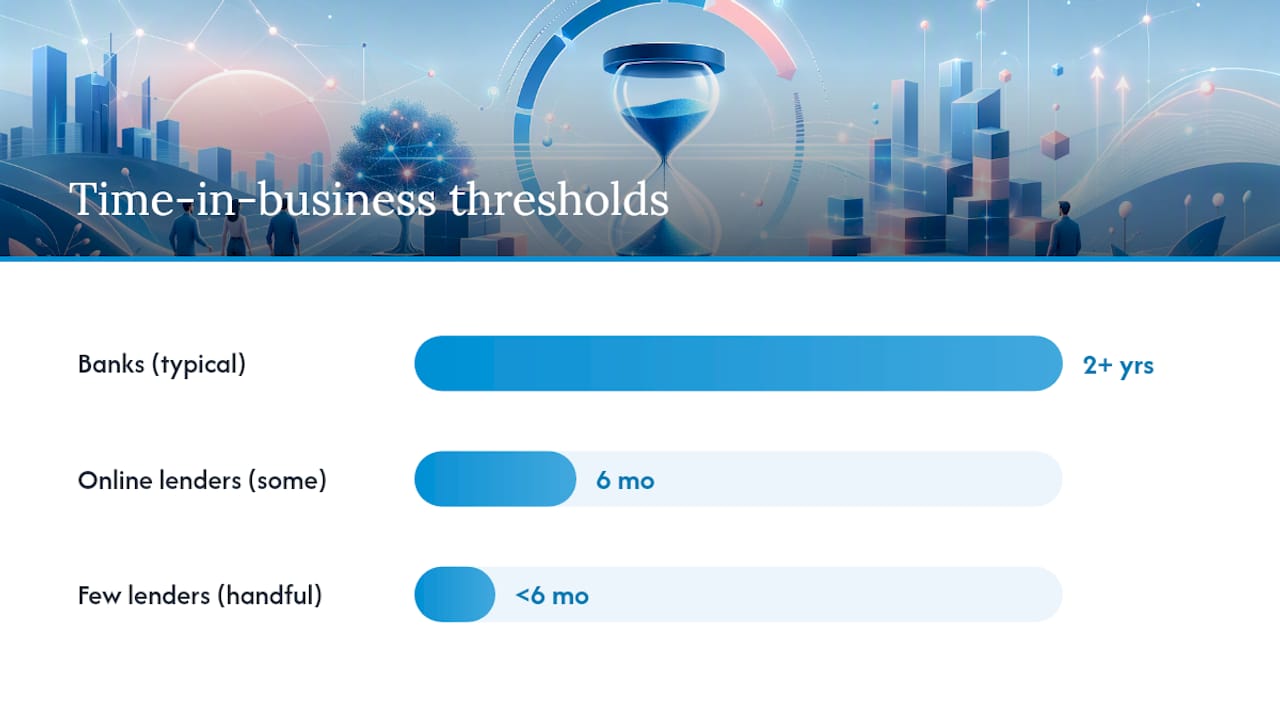
Time in business. Banks typically want two or more years of operating history. Online lenders are far more flexible, with some approving companies at six months and a handful working with businesses under that. NerdWallet’s roundup of startup lines shows just how much this threshold varies from one lender to the next, which is exactly why shopping around, or letting a marketplace do it for you, matters more for a young company than an established one.
Revenue. Banks usually expect a demonstrated, stable monthly revenue history. Online lenders will often work with businesses generating modest monthly revenue as long as it’s consistent and verifiable through connected bank data.
Collateral and compensating factors. If your revenue or credit profile is thin, a co-signer, a secured deposit, or a signed contract with a reliable client can tip an application from decline to approval.
Documents lenders typically request:
Pro Tip: Pull your personal credit report before you apply anywhere. A score in the high 600s or above opens far more doors, and if yours is lower, spend thirty days paying down revolving balances before you submit a single application.
Founders should also know that lender disclosure practices are shifting. The CFPB’s 1071 rule is expanding what lenders must report and disclose on small-business lending, which means the application forms you fill out today may start asking for more demographic and business detail than they did a few years back.
Getting from “I want a line of credit” to funded cash follows a fairly predictable sequence, and doing the prep work up front cuts real time off the process.
Pull your documents together first. Bank statements, profit and loss, EIN, business registration, revenue projections, and any signed client contracts. Having this ready before you apply, rather than scrambling once a lender asks, is the single biggest lever you control.
Decide which route fits your timeline. A direct bank application tends to offer the lowest rates but the slowest process, often two to four weeks, and it wants a longer operating history. Going lender by lender online is faster but means filling out multiple applications and comparing offers yourself. A marketplace platform takes one application and shops it across a network of lenders, which usually produces the fastest path to an actual offer.
Strengthen a thin application before you submit it. If your revenue history is short, attach collateral, a co-signer, or a signed contract that proves incoming cash. Lenders respond to evidence, not just projections.
Link your business bank account if the platform allows it. Connected account data lets a lender verify cash flow instantly rather than manually reviewing PDFs, which is a large part of why online approvals move so much faster than paper-based ones.
Read the offer terms before you accept. Compare the limit, the rate, the fees, and the repayment structure across whatever offers come back, not just the first one that lands in your inbox.
The Bluevine guide to startup lines of credit notes that online lenders and marketplaces typically expedite approvals to a matter of hours or days by relying on connected bank data instead of manual underwriting, though that speed usually comes with a higher rate than a bank would offer. If you want a deeper walkthrough of what happens after you hit submit, how business funding applications actually get processed lays out the lender-matching mechanics in more detail, and a funding checklist built for the application stage is worth running through before you submit anything.
Interest on a business line of credit accrues only on the amount you’ve drawn, not your full approved limit. That’s the core advantage over a term loan, but it also means the actual cost to you depends entirely on how disciplined you are about paying down draws instead of letting them sit.
Rates vary widely by lender type. Bank and SBA-backed lines tend to carry lower rates because the underwriting is stricter and slower. The FDIC’s resources on national rate context explain part of why: banks price risk conservatively and take longer to approve, while online lenders accept more risk and charge more for the convenience of speed. Watch for additional costs beyond the headline rate:
Repayment frequency matters more than most founders expect. Some lenders bill weekly, others monthly. A weekly repayment schedule can strain cash flow for a business with lumpy revenue, even if the total interest cost is identical to a monthly schedule, because you’re pulling cash out of the business more often.
A simple budgeting rule: try to keep your draw balance below 50% of your total limit as a working buffer, and avoid making only the minimum payment when you have the cash to pay down more. Minimum payments on a revolving line can quietly extend your interest cost for months longer than necessary.
If your revenue has grown significantly since you first opened the line, or if you’re paying a rate that no longer reflects your improved credit profile, that’s the signal to renegotiate terms or shop for a better offer elsewhere. Lenders would generally rather adjust your rate than lose you to a competitor. For more on how repayment capacity gets assessed over time, see how lenders evaluate startup repayment ability.
If a line of credit is out of reach right now, you’ve still got real options while you build toward it.
The biggest mistake founders make isn’t applying too early, it’s applying to the wrong lender first. A bank that wants two years of tax returns will reject a nine-month-old company every time, and that rejection can cost weeks you didn’t need to lose.
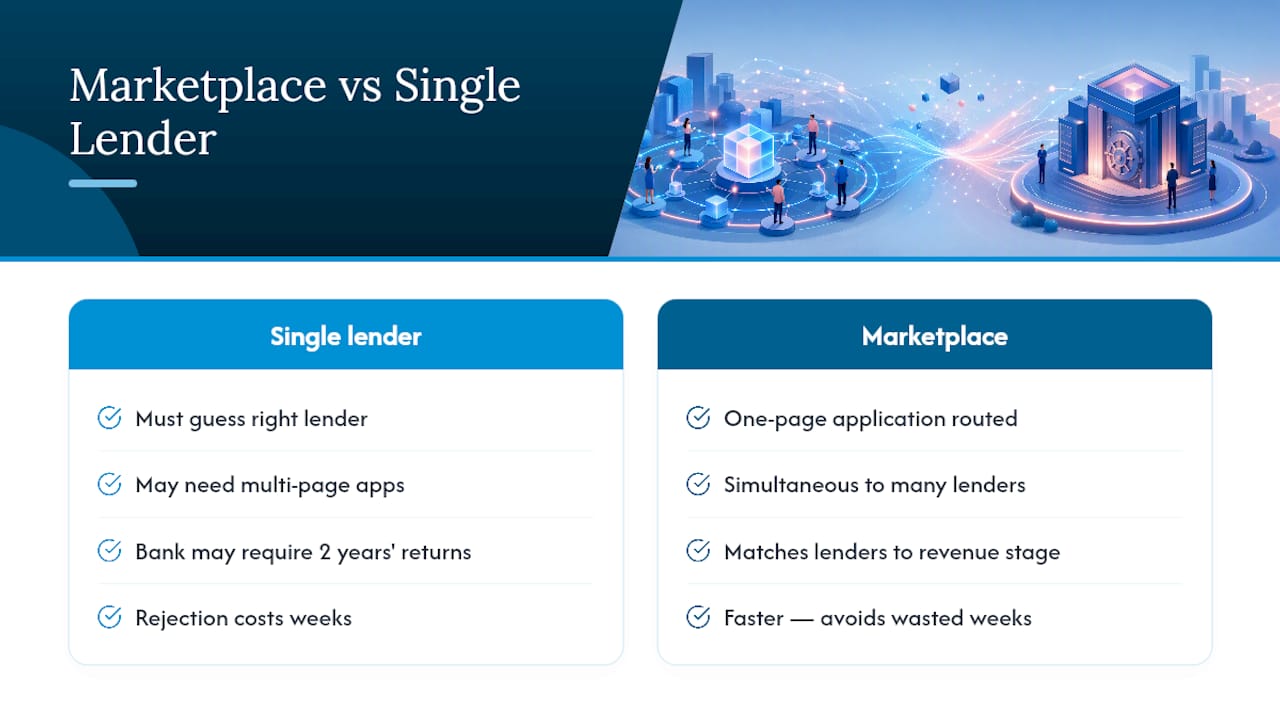
That’s the practical case for a marketplace approach. Instead of guessing which lender might say yes, a platform like Fordhamcapital takes a single one-page application and routes it to a network of banks and alternative lenders simultaneously, matching you to whichever ones actually fit your revenue stage and credit profile. Fordhamcapital holds an A+ BBB rating and has funded more than $120 million for small businesses, a track record that reflects real approvals across a wide range of credit and revenue profiles, not just the strongest applicants.
Where this matters most: a founder with six months of revenue and a decent personal credit score who’d get an automatic decline from a bank, but who fits perfectly with three or four lenders in a broader network. Marketplace matching doesn’t replace good underwriting. It just gets your application in front of lenders who were already built to say yes to someone at your stage.
— Rob
Fordhamcapital connects you with a network of banks and alternative lenders through one straightforward application, no long forms, no separate submissions to a dozen websites, and no impact to your credit score just to see what’s available. You fill out one page, and that application gets matched against lenders whose criteria fit your revenue, time in business, and credit profile.
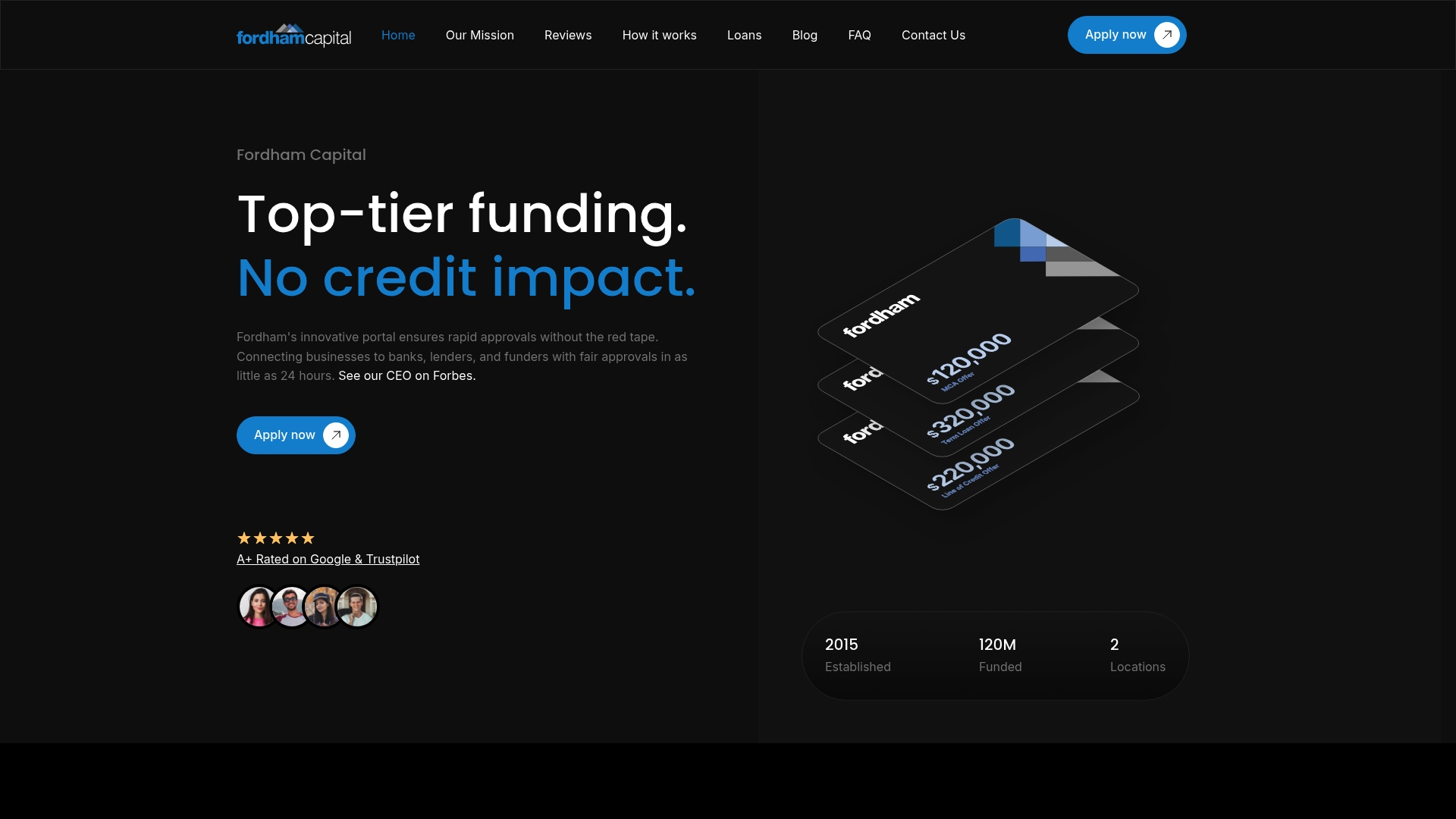
Expect to provide a few months of bank statements and basic business details, and approvals through the network can come back within 24 hours rather than the weeks a traditional bank often takes. If you’re ready to see what you qualify for, apply now and get matched with lenders suited to where your business actually stands today. You can also visit the Fordhamcapital homepage to see the full range of funding options available through the network.
This article is general information, not a substitute for advice from a qualified financial advisor. Consult a qualified financial professional about your own circumstances before acting on anything here.
At Fordham Capital, we've made the application process straightforward and reassuring. Dive in and explore your financial options with confidence, knowing there's no impact on your credit score and no obligations. We review your details and offer customized solutions based on what you're looking for.