Most SBA loans take 30 to 90 days from application to funding, with SBA Express and microloans often closing faster. The single biggest factor is your loan type combined with whether your lender holds Preferred Lender Program (PLP) authority, since that status lets a lender approve on the SBA’s behalf instead of waiting on a separate federal review. How fast you gather documents at the front end also shapes everything that follows.
TL;DR:
- SBA Express commonly takes 30–45 days, while 504 loans often need 60–90 days or longer because CDC and debenture steps add review.
- Real estate purchases, appraisals, environmental reviews, acquisitions, and multiple owners can add weeks, so build extra time into deals involving these requirements.
- Prepare three years of business and personal tax returns, current financial statements, ownership records, licenses, and a business plan limited to one page before applying.
- Choose a PLP or high volume lender, order appraisals at submission, and answer requests promptly to avoid preventable underwriting delays.
Every SBA loan moves through the same broad stages, though the time spent in each one varies by lender and loan type. Preparation usually takes several weeks, underwriting runs for multiple weeks, and closing generally adds a week or more once terms are set.
Both Investopedia and Bankrate put the typical end-to-end window at 30 to 90 days, and that range holds across most conventional 7(a) deals. The quickest wins happen early: a complete document package at submission can shave days off underwriting before it even starts, and choosing a high-volume SBA lender removes the separate federal review step entirely.
Not every SBA loan moves at the same pace, because each program has its own structure and review requirements.
A few red flags consistently slow any of these programs down: commercial real estate purchases, appraisal requirements, environmental site assessments, and multi-entity ownership structures. If your deal includes any of these, budget extra weeks beyond the typical range rather than assuming the fastest-case scenario applies.
Knowing where time actually goes helps you prepare for each stage instead of being surprised by it.
Pro Tip: Ask your lender upfront whether they hold PLP status since it changes which stage above adds the most time.
A borrower with a clean document package ready at step one routinely moves through underwriting faster than one scrambling to produce tax returns mid-process.
Most delays trace back to a handful of preventable issues.
Pro Tip: Deliver your full document bundle, including three years of returns and a one-page business summary, at the moment you apply rather than piecemeal over several weeks.
Borrowers who preempt common requests for more information at the application stage consistently see shorter underwriting cycles than those who wait for the lender to ask.
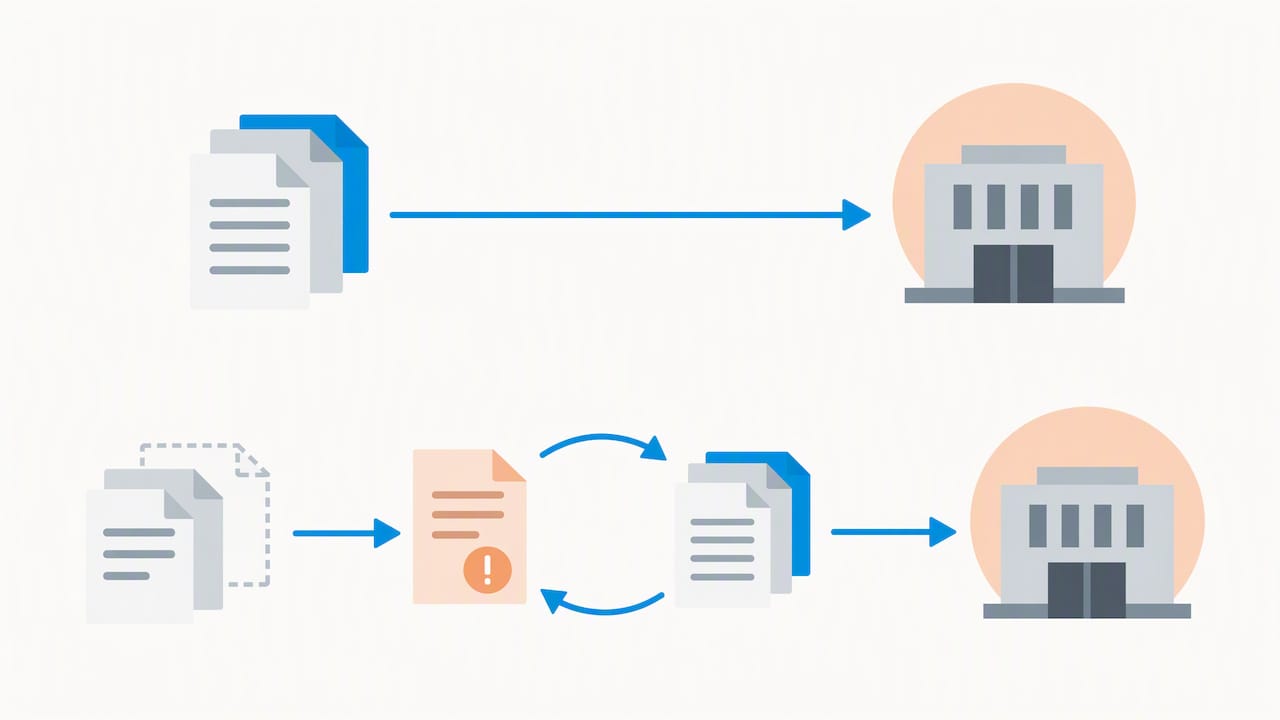
We built our process around the same bottlenecks that slow most SBA applications down. Our one-page application replaces the lengthy intake paperwork that typically stretches out the preparation stage, and our network of banks and alternative lenders means we can route your file to a lender suited to your deal rather than waiting on a single institution’s queue.
If you’re ready to move faster than the typical 30 to 90 day window allows, you can start an application or speak with an advisor through our platform.
If you want to control your own timeline, do three things immediately: assemble three years of tax returns and financials before you apply, choose a lender with PLP status or high SBA volume, and order any required appraisal the same week you submit your application. A broker or originator makes sense when you don’t already have a relationship with an SBA-experienced lender; applying direct works best when you do. Either way, build in a buffer. Even a well-prepared file can take six to eight weeks, and real estate or acquisition deals often need more.
— Rob
We connect small and medium-sized businesses to a network of banks and alternative lenders offering SBA loans, lines of credit, and working capital, all through a single one-page application.
Our SBA loan rates, line of credit rates, and working capital pricing are available on our website. There’s no collateral requirement and no impact to your credit score just for applying. If your timeline matters, you can start your application with Fordham Capital today and get a response from our lender network fast.
Yes, SBA loans commonly fund a wide range of amounts, since 7(a) loans and microloans both cover diverse borrowing needs. The exact amount you qualify for depends on your revenue, creditworthiness, and the lender’s underwriting standards.
The process runs through document preparation, application submission, lender underwriting, SBA authorization (unless your lender has PLP status), and closing. Each stage has its own typical window, with the full process commonly taking 30 to 90 days from start to funding.
This rule exists across most SBA loan programs and affects how lenders structure ownership documentation during underwriting.
Monthly payment depends on the interest rate, term length, and loan structure, so there’s no single figure that applies to every large loan. Working with a lender to run the numbers on your specific rate and repayment term gives you an accurate monthly figure.
At Fordham Capital, we've made the application process straightforward and reassuring. Dive in and explore your financial options with confidence, knowing there's no impact on your credit score and no obligations. We review your details and offer customized solutions based on what you're looking for.