
Cash flow based lending is financing that lenders size and approve using your business’s revenue and cash-generation history, not physical assets pledged as collateral. It suits businesses that need working capital fast and can show consistent deposits, even without equipment or real estate to secure a loan. The trade-off is straightforward: quicker approvals and easier access, but higher rates and repayment schedules that pull directly from daily or weekly revenue.
TL;DR:
- Cash flow lending is best suited for asset-light businesses with steady, predictable revenue and a recent history of consistent deposits, not for asset-heavy companies.
- Lenders analyze bank statements, payment reports, and receivables data to assess repayment capacity, with approval times often under 72 hours when data is clear and consistent.
- The most costly aspect of cash flow loans is their high effective rate, particularly for merchant cash advances, which can reach triple-digit APRs due to fees and rapid repayment schedules.
- Qualification depends less on credit scores and more on transparent, stable bank deposit history, with recommendations to prepare receipts, P&L statements, and clear forecasts before applying.
- Pricing and terms are flexible, so borrowers should negotiate repayment frequency, holdbacks, and compare multiple offers, especially if they have previous successful borrowing history.
Cash flow based lending flips the traditional bank model on its head. Where a conventional secured loan asks “what can we seize if you default?”, a cash-flow lender asks “how much money moves through your business, and how reliably?” The underwriting anchor is future cash generation rather than the liquidation value of trucks, equipment, or property, according to Investopedia’s comparison of the two lending models.
That distinction changes everything downstream: who qualifies, how fast funding arrives, and what it costs. A service business with no hard assets but steady monthly deposits can qualify for cash-flow financing even though it would struggle to get a traditional asset-secured line.
Several product structures fall under this umbrella, and the terminology trips up a lot of first-time borrowers:
Collateral still shows up in this world, just in a lighter form. Many cash-flow lenders skip hard collateral entirely but still ask for a personal guarantee and file a UCC lien against business assets as a backstop. That lien does not require an appraisal the way a secured loan does. It is filed and perfected under state commercial law, following the same statutory framework that governs security interests generally. Understanding that difference matters before you sign, because a guarantee and a lien still put personal and business assets at risk even when nobody calls the loan “secured.”
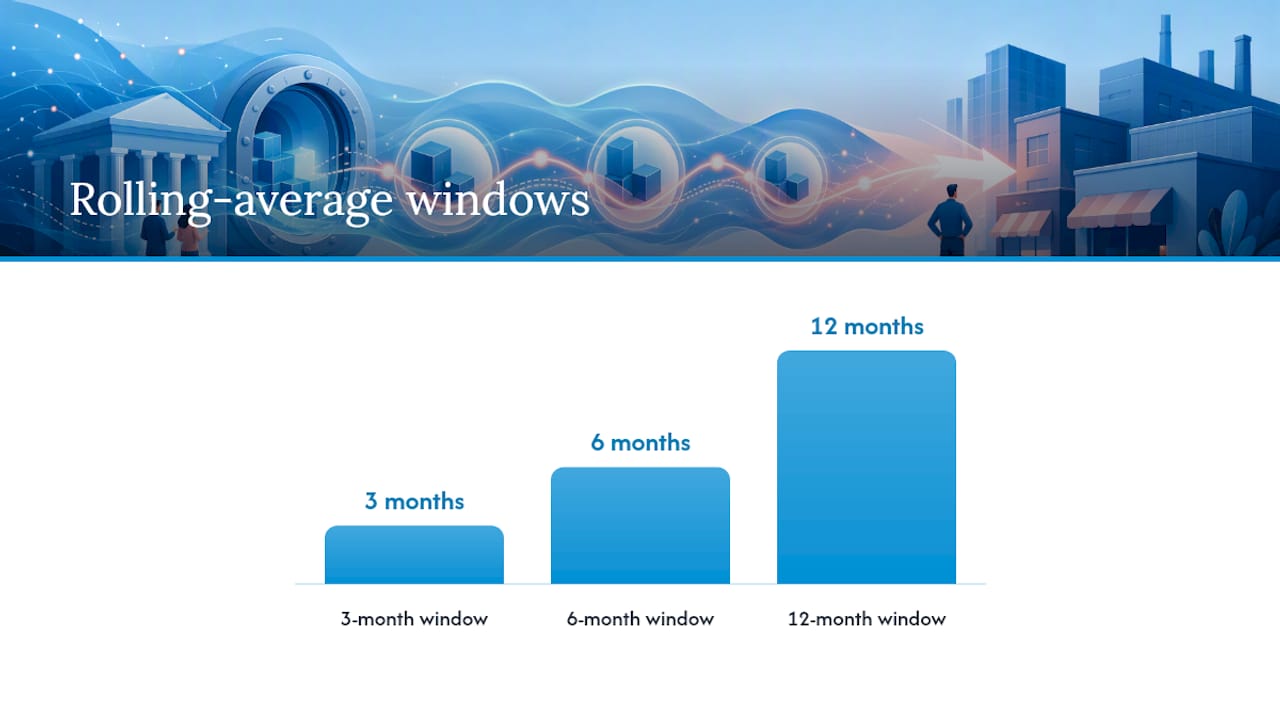
Cash-flow underwriting is a data exercise before it’s a credit decision. Lenders pull bank statements, payment-processor or POS reports, accounting exports, and sometimes outstanding invoices, then reconstruct what your cash flow actually looks like month to month, according to Uptiq’s breakdown of cash-flow underwriting.
The process generally follows a few consistent steps:
Gross margin and customer concentration matter more here than in traditional lending. A business generating $80,000 a month from one client looks riskier to a cash-flow underwriter than one making the same revenue from forty clients, even if both show identical bank balances.
Underwriting metrics that matter most:
| Metric | What it measures | Why lenders care |
|---|---|---|
| DSCR | Cash flow relative to debt payments | Confirms repayment capacity beyond raw revenue |
| Net cash inflow (NCI) | Rolling average of deposits minus outflows | Smooths seasonal noise, reveals the real trend |
| Cash-flow volatility | Month-to-month swing in deposits | High swings mean higher risk pricing |
| Customer concentration | Share of revenue from top clients | Concentration risk raises default exposure |
| AR aging | Speed of invoice collection | Slow-paying customers reduce effective liquidity |
Lenders increasingly plug into account-aggregation tools that verify deposits automatically and flag inconsistent cash inflow patterns rather than relying on a borrower’s self-reported numbers, per Plaid’s guidance on cash-flow underwriting. That automation is also why approvals move fast: many cash-flow lenders can turn around a decision in 24 to 72 hours once bank data is connected, compared to weeks for a traditional secured facility that requires collateral appraisal.
The core question isn’t which option is “better.” It’s which underwriting anchor matches how your business actually generates value. Cash-flow lending bets on your future revenue; asset-based lending bets on what your equipment, inventory, or receivables would fetch in a forced sale, as Investopedia’s comparison lays out clearly.
That single difference cascades into everything else:
Neither approach is inherently riskier. A trucking company with a fleet worth $2 million and choppy monthly revenue is a textbook asset-based borrower. A digital agency with zero hard assets but eighteen months of steady $150,000 monthly deposits is a textbook cash-flow borrower.
Some businesses land in between, and lenders sometimes structure a blended facility, part asset-backed line, part cash-flow overlay, when a borrower has meaningful equipment or receivables but also needs faster, more flexible access than a pure asset-based deal allows. That hybrid structure is worth raising directly with a lender if your balance sheet doesn’t fit neatly into either category.
Product choice usually comes down to how predictable your revenue is and how quickly you need funds. According to SoFi’s overview of cash flow loans, these tools are largely designed as short-term working-capital solutions rather than long-term growth capital.
Real-world triggers for each product often look the same across industries: covering payroll during a slow month, financing seasonal inventory before a peak season, or bridging the 60-day gap between invoicing a customer and getting paid.
Qualification hinges less on your credit score and more on whether your bank data tells a clean, consistent story. Lenders want to see what your loan approval factors actually look like before they price a deal.
Before applying, tighten up what a lender will actually see. Separate personal and business accounts if they’re still mixed. Reduce erratic owner draws in the months before applying. Automate your bookkeeping so deposits reconcile cleanly against your P&L. Small cleanup work here can meaningfully shift the role cash flow plays in unsecured loan approvals.
Pro Tip: Ask every lender to spell out the repayment cadence, the factor rate versus the equivalent APR, whether holdbacks or reserves apply, and exactly what a personal guarantee or UCC lien covers before you sign anything. Getting these answers in writing upfront prevents the most common post-funding surprises.
Cost is where cash-flow lending earns its reputation as expensive money. Because many of these products are unsecured or lightly secured, lenders price in risk through factor rates or APRs that swing widely, and NerdWallet’s guide to cash flow loans notes that merchant cash advances in particular can reach triple-digit effective APRs once fees and repayment frequency are factored in.
Repayment frequency is the risk most borrowers underestimate. A daily or weekly deduction looks manageable on paper, but a slow week can turn a comfortable payment into a genuine cash squeeze, a scenario worth modeling before signing, not after.
Watch for these common contract traps:
The fix isn’t avoiding cash-flow lending altogether. It’s modeling worst-case repayment scenarios before you borrow, capping any single facility’s draw as a percentage of monthly receipts, and staggering borrowing instead of layering multiple advances on top of each other.
Fordham Capital holds an A+ rating with the Better Business Bureau and has helped fund over $120 million for small and medium-sized businesses, work that has supported clients in generating more than $500 million in revenue. That track record comes from a specific role: acting as a marketplace that matches businesses to a network of banks and alternative lenders rather than underwriting loans directly.
That marketplace model matters most when speed and fit both count:
A marketplace approach fits best when working capital needs are urgent and you’d rather compare several qualified offers quickly than spend weeks negotiating with a single bank.
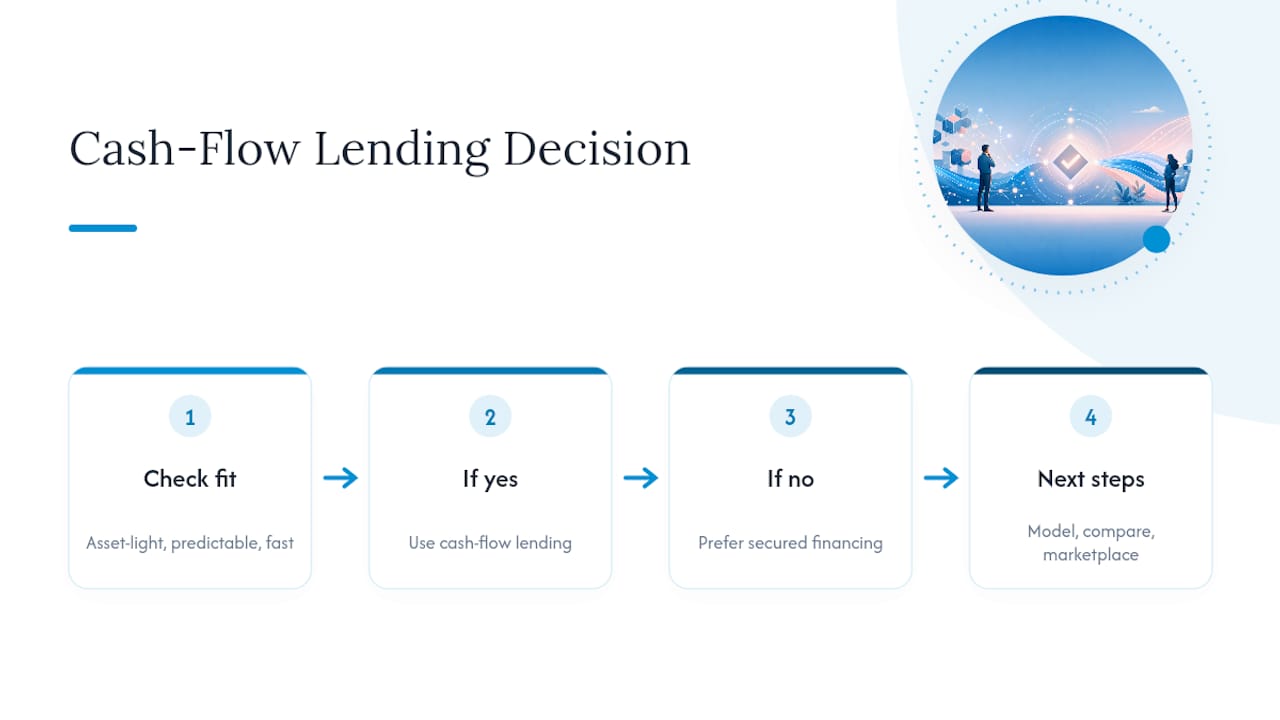
Use it if your business is asset-light, your revenue is reasonably predictable, and you need capital in days rather than weeks. Skip it if you can qualify for cheaper, longer-term secured financing, or if your cash flow is too volatile to absorb daily or weekly deductions. From here, three moves matter most: model the repayment impact against a slow month, compare at least two or three lender offers side by side, and consider a marketplace application to see qualified options without committing upfront.
Cash-flow lending sits in a lighter-regulated corner of commercial finance than consumer lending, but it isn’t a legal gray zone. Business loans generally fall outside the consumer protection statutes that govern personal credit, which is part of why terms and disclosure requirements vary so much from lender to lender.
The main legal mechanism you’ll encounter is the UCC lien. Even when a cash-flow lender advertises “no collateral required,” most still file a blanket lien against business assets under state commercial code, giving them a claim if the business defaults, without requiring the appraisal process that comes with traditional secured lending. These filings and their priority rules trace back to the same commercial law framework covering security interests under federal statute.
Personal guarantees are the other piece worth reading carefully. Signing one means a business default can reach personal assets, even when the loan itself is structured as unsecured business financing. Some states also regulate merchant cash advances differently than loans, since MCAs are technically structured as a purchase of future receivables rather than a loan, which affects usury caps and disclosure rules depending on your state.
Before signing, confirm three things in writing: whether a personal guarantee is required, what a UCC lien actually covers, and whether your state treats the product as a loan or a receivables purchase. That last distinction can change your legal exposure more than the interest rate does.
Most cash-flow products don’t report to personal credit bureaus the way a traditional bank loan does, since the underwriting decision is based on business cash flow rather than a personal credit pull. That’s part of the appeal: shopping multiple offers usually doesn’t create the hard inquiries that dent a personal score.
Business credit is a different story. Many cash-flow lenders do report payment activity to business credit bureaus, and consistent, on-time repayment can build a stronger business credit profile over time, one that helps with future financing at better terms. Missed or late payments cut the other way, and a UCC lien filed against your business shows up in business credit searches even after the loan is repaid, unless the lender files a formal termination.
The bigger credit risk isn’t the loan itself. It’s what repeated borrowing does to your cash position. Stacking multiple cash-flow advances to cover shortfalls can strain daily cash flow enough to cause missed payments elsewhere, on rent, payroll, or supplier terms, and those missed payments are what actually damage a credit profile. The lesson here is straightforward: treat a cash-flow loan as a bridge to a specific, dated need, not a recurring patch for ongoing shortfalls.
Cash-flow lending isn’t the only route to working capital, and it isn’t always the cheapest one. A working capital loan structured around traditional terms can offer lower rates for businesses with the credit history and collateral to qualify, just with a slower approval timeline.
SBA loans sit at the other end of the spectrum: lower rates and longer terms, backed partly by a government guarantee, but underwriting can take weeks and requires substantially more documentation than a cash-flow product. Traditional bank term loans and equipment financing work well for businesses buying a specific, appraisable asset, since the asset itself can secure better pricing than an unsecured cash-flow advance would.
Equity financing is worth a mention too, even though it isn’t debt. Trading ownership stake for capital avoids repayment pressure entirely, but it also means giving up a piece of future profit and often some control, a trade-off that only makes sense for businesses planning significant growth rather than covering a short-term gap. Understanding how capital allocation decisions get made across a business’s full funding stack helps clarify when debt makes more sense than equity, and vice versa.
The right call depends on timeline and cost tolerance more than anything else. If you can wait four to six weeks and qualify for secured or SBA financing, you’ll almost always pay less. If you need funds in days and your revenue history is strong, cash-flow lending closes that gap that slower products simply can’t.
Cash-flow lenders have more pricing flexibility than most borrowers assume, especially when a business brings clean bank data and a clear use case to the table. Treat the first offer as a starting point, not a final number.
Ask specifically about the factor rate versus its APR equivalent. Lenders sometimes quote a factor rate because it sounds smaller than the equivalent APR, and asking for the conversion up front puts you on equal footing during negotiation. Push on repayment frequency too. Some lenders will shift from daily to weekly deductions for stronger applicants, which meaningfully reduces the day-to-day cash strain.
Volume matters more than most borrowers realize. If you’ve repaid a previous advance on time, use that history as leverage. Lenders often offer better rates on repeat business because the repayment track record lowers their perceived risk. Multiple offers also strengthen your position; comparing two or three term sheets side by side, ideally through a single application rather than several separate ones, gives you real numbers to negotiate against instead of guessing whether a rate is competitive.
Finally, negotiate holdbacks and reserve requirements as hard as you negotiate the rate itself. A lower rate paired with an aggressive holdback can cost more in practice than a slightly higher rate with a lighter reserve. Get the full repayment structure in writing before comparing offers on rate alone.
The conventional advice on cash-flow lending tends to stop at “it’s fast but expensive,” which is true but incomplete. What the underwriting mechanics actually reveal is that pricing correlates more tightly with cash-flow volatility than with revenue size. A steady $40,000-a-month business often gets better terms than a choppy $150,000-a-month one, because lenders are pricing consistency, not scale.
Where most guides fall short is treating all cash-flow products as interchangeable. A merchant cash advance and a revenue-based facility both key off cash flow, but they behave completely differently under stress, one deducts a fixed daily percentage regardless of your bank balance, the other flexes with actual revenue swings. Borrowers who read the fine print on repayment mechanics, not just the headline rate, make better decisions than those comparing APRs alone.
If there’s one priority worth acting on first, it’s this: model your worst realistic month before you sign anything. Run the numbers assuming a 20 percent revenue drop and see whether the repayment obligation still fits. Lenders already stress-test your cash flow before approving you. Doing the same exercise yourself, before signing, is the single habit that separates borrowers who use cash-flow financing well from those who get trapped by it.
— Rob
Traditional banks can take weeks to review a cash-flow application, and many turn away asset-light businesses outright because there’s nothing to appraise. Fordham Capital exists specifically to close that gap: one application, a network of banks and alternative lenders competing for your business, and a decision that typically arrives within 24 hours instead of buried in a loan committee queue.
That speed comes without the usual cost of shopping around. Submitting a one-page application typically doesn’t trigger a hard credit inquiry, so comparing offers across multiple lenders may avoid dinging your score the way applying separately to several banks would. The platform has built its reputation on matching the right lender to the right cash-flow profile, not pushing whichever product pays the biggest referral fee.
If your business has steady deposits, a clear funding need, and no interest in waiting six weeks for an answer, apply now and see what offers come back. You can also review Fordham Capital’s full range of funding options at Fordhamcapital before deciding which product fits your next move.
At Fordham Capital, we've made the application process straightforward and reassuring. Dive in and explore your financial options with confidence, knowing there's no impact on your credit score and no obligations. We review your details and offer customized solutions based on what you're looking for.