
SBA 7(a) loans currently max out at Prime plus a spread that ranges from 3.0% to 6.5% depending on loan size, while SBA 504 debenture rates run roughly 6.19% for 10-year terms and 6.27% for 20 and 25-year terms as of August 2026. The spread on a 7(a) loan and the monthly debenture pricing on a 504 loan are what actually set your number, not some flat published SBA rate. Fees, loan size, and whether you pick fixed or variable pricing all shift the real cost from there.
TL;DR:
- Borrowers should consider that SBA 7(a) interest rates depend on the selected base rate, with Prime being the most common, and the actual cost varies with fees, loan size, and pricing timing.
- Larger 7(a) loans over $350,000 tend to have lower maximum spreads, often around 3.0%, compared to smaller loans, which can have spreads up to 6.5%.
- The final rate is also influenced by whether the borrower chooses fixed or variable pricing, and timing of the application relative to interest rate movements affects the quoted rate.
- SBA 504 rates are tied to monthly debenture sales and can fluctuate slightly between the application date and the sale, which is determined by the specific month’s pricing cycle.
- Using a marketplace or broker can streamline comparisons, help lock in current rates quickly, and avoid surprises caused by timing or fee financing.
The SBA doesn’t lend money directly. It guarantees a portion of a loan a bank or credit union makes, then caps how much that lender can charge on top of a base rate. That cap, not a single published SBA figure, is what defines “the rate” on any 7(a) loan.
Here’s how the 7(a) maximum rate caps break down by loan size, along with current 504 debenture pricing:
For 7(a) loans, “base rate” usually means Prime, though lenders can also use the SBA Optional Peg Rate or a Treasury or SOFR-indexed alternative under approved procedural guidance. Whichever base rate a lender picks, the spread caps in the table above are the ceiling. A lender can charge less. Very few do.
The 504 numbers work differently. That’s a blended structure: a conventional first mortgage from a bank, plus a second mortgage debenture sold to investors and guaranteed by a Certified Development Company (CDC). The debenture portion is priced monthly, which is why you’ll often see 504 rates quoted as a specific number for a month instead of a range.
Every 7(a) rate ceiling traces back to two things: a base rate index and a spread cap tied to loan size. The SBA’s procedural notices spell out which base rates lenders are allowed to use. Prime is the most common choice because it’s stable and every borrower recognizes it. Some lenders use the SBA Optional Peg Rate instead, a rate the SBA itself publishes and updates, or an alternative tied to the 10-year Treasury yield or SOFR.
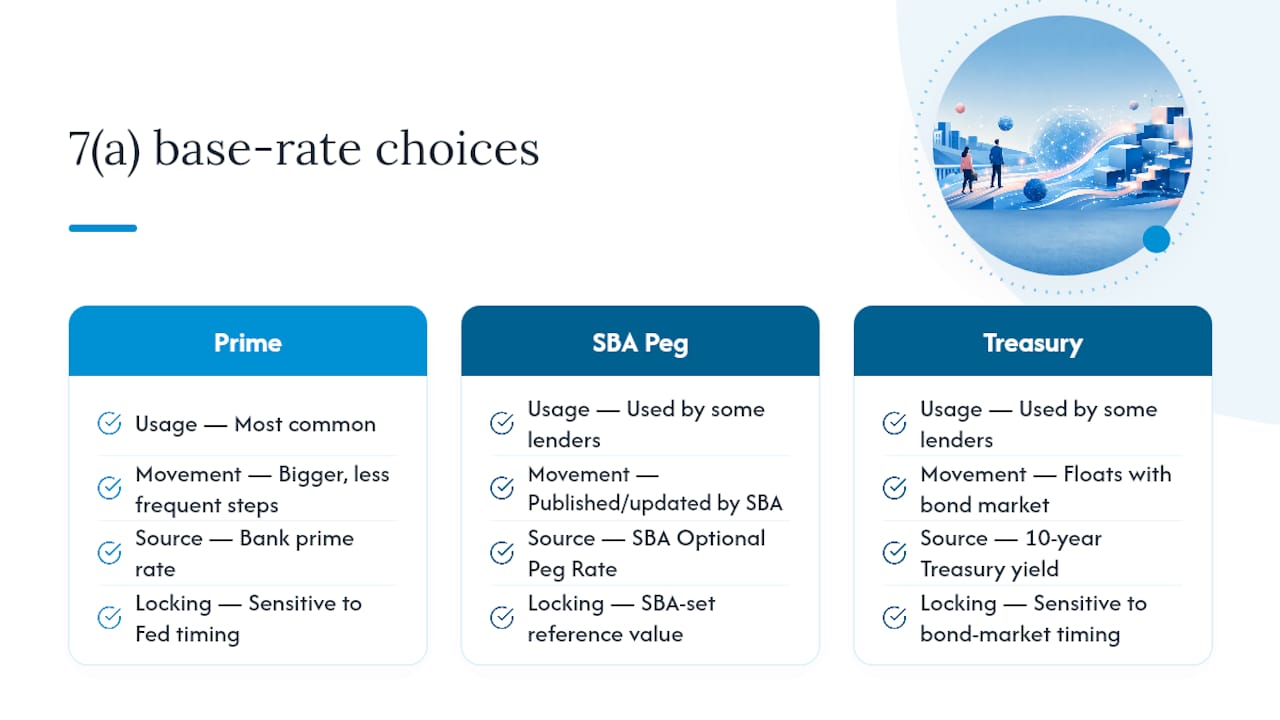
Why does the choice matter? Prime tends to move in bigger, less frequent steps tied to Federal Reserve decisions. SOFR and Treasury-indexed rates float more continuously with the bond market. A borrower locking in a Prime-based loan right before a Fed rate cut gets a different outcome than one indexed to SOFR the same week.
The 504 side runs on a completely different clock. CDCs bundle debentures and sell them to investors on a fixed monthly schedule, typically the first Thursday of the first full week of the month. Until that sale happens, your quoted rate is an estimate, not a lock. Apply in the middle of a pricing cycle and the number you were quoted at application can move by the time your debenture actually prices and sells.
Federal Register notices provide the official record any time these mechanics change, which is worth knowing if you ever need to verify a rate change wasn’t just a lender’s error.
The tables above set the ceiling. What you get quoted depends on a handful of factors a lender weighs on every application:
Pro Tip: Ask any lender quoting you a rate whether it’s tied to Prime, the Optional Peg Rate, or a Treasury/SOFR alternative. The base rate they pick, not just their spread, determines how your payment moves over the life of the loan.
The interest rate on your term sheet isn’t your full cost. SBA 7(a) loans carry a guarantee fee charged on the government-guaranteed portion of the loan, and the FY2026 fee schedule scales that fee up with loan size and guaranteed amount. Larger loans generally carry a higher percentage fee on the guaranteed portion.

504 loans add their own layer: an upfront debenture fee plus ongoing CDC servicing fees baked into the debenture’s coupon rate. Some manufacturing borrowers qualify for reduced fees under separate SBA rules, which is worth checking before you assume the standard fee schedule applies.
Here’s the part that catches people off guard. Lenders routinely finance these fees into the loan principal rather than charging them upfront. That’s convenient for cash flow, but it means your nominal interest rate understates your effective annual cost. Always ask a lender to break out financed fees separately so you can compare offers on equal footing.
Real numbers make the rate caps easier to picture:
Don’t take any published range, including the ones above, as gospel past the date you’re reading this. The SBA’s 7(a) program page and its FTA wiki host the current spread caps and Optional Peg Rate. SomerCor and other CDCs publish monthly 504 debenture pricing the week it’s set. The Federal Register carries the official notices when anything changes, and FRED’s 10-year Treasury series plus the New York Fed’s SOFR data give you the underlying benchmarks lenders reference.
Bookmark the 504 pricing page and check it monthly if you’re planning a purchase. If a lender quotes you a rate, ask which pricing date it’s tied to. That single question avoids most of the surprise you’d otherwise get between application and closing.
Shopping SBA rates one bank at a time eats weeks you may not have. A marketplace or origination partner can surface lenders pricing more competitively on both rate and fee structure, rather than betting everything on whichever local bank you already know. Fordhamcapital works this way: a one-page application connects you to a network of banks and alternative lenders instead of one branch’s underwriting team.

That approach fits best when you want to compare multiple lender offers quickly rather than negotiate with a single CDC or bank directly. If you already have a strong relationship with a local bank that handles SBA lending well, going direct still makes sense. For everyone else weighing eligibility and paperwork, it helps to understand SBA loan requirements before you start comparing quotes.
Most advice on SBA rates stops at the spread table and calls it a day. That’s the easy part. What actually separates a good SBA loan from an expensive one is whether you understood the fee structure, picked the right base rate for your risk tolerance, and timed your 504 application around a pricing date instead of applying blind.
The conventional wisdom treats SBA financing as automatically cheaper than a conventional bank loan. It usually is, but not always. A 504 loan applied for mid-cycle without attention to the pricing calendar can land you a worse effective rate than a borrower who timed it around the monthly debenture sale. Fixed versus variable matters more than most guides admit, too. Borrowers chasing the lowest headline number often pick variable without weighing what happens to their payment if Prime climbs two points over the loan term.
If you take one thing from this, prioritize the base rate index and the pricing date over the headline percentage. Those two variables control more of your actual cost than the spread cap ever will.
— Rob
Comparing SBA rates across multiple banks usually means separate applications, separate credit pulls, and weeks of waiting to hear back. Fordhamcapital cuts that down to one application that reaches a wide network of banks and alternative lenders at once, with no impact to your credit score just to see what’s available.
To get started, you’ll want your recent business tax returns, a few months of bank statements, and basic financial statements ready. After you submit, expect lender outreach and initial quotes within a short window rather than the multi-week runaround typical of direct bank applications. Fordhamcapital holds an A+ BBB rating and has funded over $120M for small businesses across the country. If you want a real, current rate quote instead of another published range, apply now and see what lenders in the network can offer you.
Figures above come from the SBA’s 7(a) program page, SomerCor’s monthly 504 rate updates, the Federal Register, FRED Treasury data, and FBDC’s 504 rate comparison.
This article is general information, not a substitute for advice from a qualified financial advisor. Consult a qualified financial professional about your own circumstances before acting on anything here.
At Fordham Capital, we've made the application process straightforward and reassuring. Dive in and explore your financial options with confidence, knowing there's no impact on your credit score and no obligations. We review your details and offer customized solutions based on what you're looking for.