

Choose a term loan for one-time, high-cost investments like equipment or a buyout, and choose a line of credit for ongoing or unpredictable cash needs like payroll gaps or seasonal inventory. Term loans usually cost less over time but lock you into fixed payments, while a line of credit costs more for flexibility. The sections below cover the SBA nuances and exceptions worth knowing before you apply.
TL;DR:
- A business line of credit offers flexible access to funds with interest paid only on drawn amounts, making it suitable for ongoing or unpredictable expenses.
- Term loans provide a lump sum for specific, high-cost investments with fixed payments and generally lower total costs over the repayment period.
- Applying for a line of credit in advance of cash needs improves approval chances and secures better terms, as approval is harder when finances are already tight.
- Future borrowing costs depend heavily on the lender type, with bank lines typically cheaper but slower, and online lenders faster but often more expensive.
- Comparing offers requires examining APR, repayment terms, collateral requirements, and red flags such as hidden fees or conversion clauses that change the loan type unexpectedly.
A term loan gives you a lump sum upfront that you repay in scheduled installments, usually monthly, over a set period. Rates can be fixed or variable, but most term loans amortize so each payment covers a mix of principal and interest until the balance hits zero. Terms generally vary from short-term loans for working capital to much longer terms for real estate, with lenders usually tying the length to what you’re financing: shorter for equipment, longer for property.
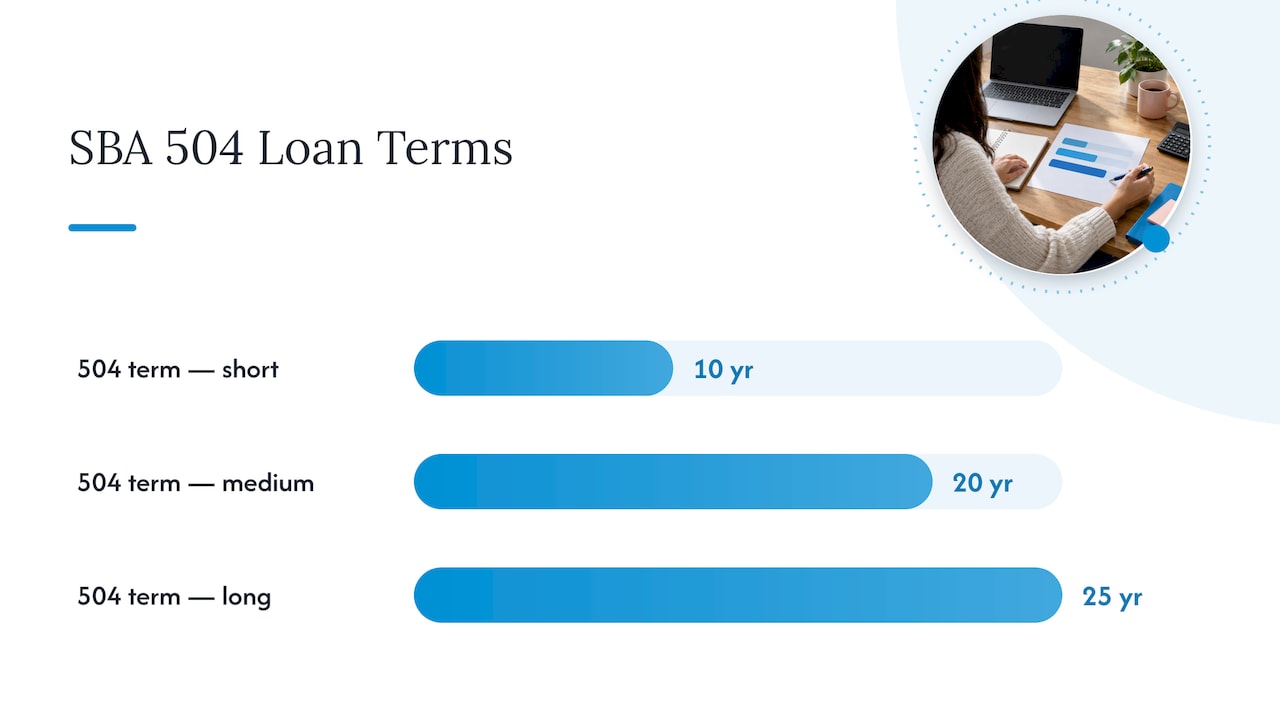
Term loans work well for a defined purchase such as machinery, a vehicle fleet, a building, or consolidating higher-cost debt into one predictable payment. This is where the SBA 504 program draws a hard line: 504 loans finance major fixed assets like real estate and equipment with 10, 20, or 25-year terms, but the program explicitly cannot be used for working capital. The SBA 7(a) program is more flexible on use of proceeds and even includes some revolving structures, so the loan type you assume you need can be the wrong one until you check the program rules.
Lenders underwriting a term loan typically ask for:
Collateral and guarantee requirements vary by lender and loan size. The SBA’s guidance on unsecured funding notes that “no collateral” does not always mean no personal liability, since a lender may still require a personal guarantee. For more on how amortization and payment structure play out, see this breakdown of business term loans.
A business line of credit gives you access to a set credit limit that you can draw from, repay, and draw from again, similar to a credit card but usually with lower rates and higher limits. You only pay interest on the amount you’ve actually drawn, not the full limit, which makes it cheaper to hold as backup than to use as your main funding source. Rates are often variable and tied to an index, so your payment can shift month to month depending on how much you owe and where rates move.
Repayment frequency also differs from a term loan. Some LOCs require weekly or monthly minimum payments on the drawn balance, while others expect interest-only payments with principal due at renewal. According to the SBA’s overview of business lines of credit, a LOC can be cheaper than options like a merchant cash advance for working capital, though bank-issued lines tend to carry stricter approval standards than online lenders.
A line of credit tends to fit:
Speed varies by lender type. Banks often take longer to approve a LOC but offer better pricing, while online lenders move faster and charge more for it, a trade-off covered in more detail in this guide to line of credit uses.
The right product usually comes down to whether your need is a single event or an ongoing pattern. A term loan suits a purchase with a clear price tag and a payback timeline you can calculate in advance. A line of credit suits a need that repeats, fluctuates, or hasn’t fully materialized yet.
Run through these decision rules before you apply:
Each scenario carries different tradeoffs. A term loan gives you predictable payments and often a lower total cost, but it locks in a fixed amount and fixed collateral risk from day one. A line of credit costs more per dollar borrowed but adjusts to what you actually need, and it’s typically faster to redraw once established. Renewability also differs: a well-managed LOC usually renews, while a term loan is a one-time transaction that ends when it’s paid off.
Pro Tip: Open a line of credit while your finances look strong, even if you don’t need it yet. Waiting until cash is tight makes approval harder and terms worse.
Before comparing offers, gather the paperwork lenders will ask for regardless of which product you choose:
Once you have offers in hand, compare more than the headline rate. Look at the APR, not just the nominal rate, since fees can widen the gap significantly. Check payment frequency, prepayment penalties, and exactly what collateral or personal guarantee the lender requires.
Watch for a few red flags: unclear or stacked fees, mandatory daily or weekly payments that strain cash flow, and conversion clauses that turn a revolving line into a term loan without warning. The SBA notes that some 7(a) revolving loans convert to term financing after a set period, so ask directly whether your line has a similar clause.

A 2026 Federal Reserve survey found that applicants to small banks were fully approved for their requested amount 57% of the time, a higher rate than other lender types, while online lenders drew more reports of higher-than-expected borrowing costs. That gap is a strong argument for applying before you’re desperate: partial approvals and cost surprises are common enough that treating a credit limit as guaranteed backup capital is a mistake. For a fuller list of what underwriters check, see this rundown of business loan approval factors.
Matching a business to the right financing product comes down to reading past the label. An “SBA loan” can be revolving in some 7(a) structures, and a “line of credit” can carry a conversion clause that turns it into a term loan later, so the fine print matters more than the category name.
A business funding marketplace has funded significant amounts for small and medium-sized businesses through a one-page application and a network spanning banks and alternative lenders, holding a high BBB rating along the way. This kind of marketplace access lets a business owner compare an SBA-backed offer against a non-SBA option side by side instead of applying to multiple lenders one at a time.
— Rob
If you’ve landed on a term loan, a line of credit, or an SBA loan as your best fit, a business funding marketplace gives you a direct path to compare real offers instead of guessing which bank might say yes.
Applying takes a few minutes: expect to share basic revenue and time-in-business details up front, with fuller documentation requested once a lender shows interest. Start your application with Fordham Capital to see what you qualify for.
Neither is universally better: a line of credit fits ongoing or unpredictable cash needs, while a term loan fits a one-time purchase with a fixed cost. The right choice depends on whether your need repeats or is a single event.
LOC stands for line of credit, a revolving credit limit you can draw from, repay, and draw from again. You pay interest only on the portion you’ve drawn, unlike a term loan which has fixed payments typically covering full amount amortized over time, as Investopedia explains.
Rates vary by lender type and borrower profile, so there’s no single benchmark that applies to every business. Bank-issued lines tend to carry lower rates than online lenders, though banks usually have stricter approval standards.
Yes: rates are often variable, so payments can rise, and some lines carry conversion clauses that turn an unused revolving balance into a term loan after a set period. Reading the renewal and conversion terms before signing avoids surprises later.
At Fordham Capital, we've made the application process straightforward and reassuring. Dive in and explore your financial options with confidence, knowing there's no impact on your credit score and no obligations. We review your details and offer customized solutions based on what you're looking for.


.jpg)


