
Most small business owners in the U.S. can qualify for financing using only bank statements, no tax returns required. Online and alternative lenders typically ask for 3 to 6 months of statements, while traditional banks and SBA lenders usually want 12 to 24 months plus full financial statements.
The tradeoff is real: bank-statement loans move faster and demand less paperwork, but they tend to carry higher rates, shorter repayment terms, and sometimes a personal guarantee.
Your next move: Pull together 3 to 12 months of clean business bank statements, check the minimum history each lender wants, and if your profile fits, apply through a network like Fordham Capital’s one-page application.
Bank-statement business loans trade heavier paperwork for speed, and preparation before applying matters more than which specific lender you choose.
| Point | Details |
|---|---|
| Months of history required | Online lenders typically want 3 to 6 months; banks and SBA loans want 12 to 24 months plus tax returns. |
| Core underwriting signals | Lenders weigh average monthly deposits, cash-flow consistency, and average daily balance most heavily. |
| Red flags to fix first | NSFs, overdrafts, unexplained large deposits, and mixed personal/business transactions all hurt your offer. |
| Cost tradeoff | Faster approval and lighter documentation usually mean higher rates and shorter terms than bank financing. |
| Apply through Fordham Capital | A one-page application connects you to a lender network with approvals often within 24 hours and no credit impact to apply. |
A bank-statement business loan skips the tax-return underwriting model entirely. Instead of reconstructing your profit and loss from a Schedule C or business return, the lender reads your deposits, withdrawals, and balances directly off your checking account activity. It’s cash-flow underwriting, not tax-based underwriting, and that single shift is why approval can happen in hours instead of weeks.
Several loan products commonly run on this model:
SBA loans and traditional banks sit outside this model. They still want 12 to 24 months of statements alongside tax returns and financial statements, which is why they take longer but often price lower.
Some applicants sail through bank-statement underwriting. Others get denied or land in the highest-rate tier before they even realize why.
Underwriters aren’t skimming your statements for a general impression. They’re pulling specific numbers, and those numbers set your offer.
The core metrics are average monthly deposits, cash-flow consistency month to month, and average daily balance. Lenders lean on these three figures more than almost anything else on the page, because together they approximate revenue and stability without needing a tax return.
Red flags matter just as much as the good numbers:
Here’s something most applicants miss: submitting more months of history often works in your favor, not against it. A 12-month statement set gives underwriters context to see that a rough month was a one-time supplier payment, not a trend. Three months of statements with one bad week can look worse than twelve months that put that week in perspective.
Pro Tip: If a specific month looks messy, attach a one-paragraph cover letter explaining it. A $40,000 deposit from a lawsuit settlement or equipment sale reads very differently with a receipt attached than it does sitting unexplained on page three.

Preparation is where you actually control your rate. Do this in order:
Pro Tip: A service that helps clean up your bookkeeping before you apply often pays for itself in a better rate tier alone.
Bank-statement loans cost more because lenders are pricing in speed and risk with less documentation to lean on. Expect shorter terms and higher APRs than a bank loan, and expect the rate to reflect that tradeoff directly.
Repayment cadence varies sharply by product. Merchant cash advances often pull daily or weekly payments straight from receivables, which can squeeze cash flow even after a fast approval. Term loans and lines of credit usually settle into monthly payments instead.
Fordham Capital built its process around the exact friction bank-statement borrowers run into elsewhere: too much paperwork, too much waiting, and a hard credit pull before you even know your options.
The gap most SMB owners hit isn’t whether they qualify. It’s how many separate applications and hard pulls it takes to find out. A single application checked against multiple lenders at once solves that problem directly.
Fordham fits businesses with the profiles covered above: steady deposits, a handful of clean months on the books, and a need for capital faster than a bank can move. After you apply, you’ll typically see offers within a day, and you should compare rate, term, and repayment cadence before accepting anything.
Most guides treat bank-statement lending as a fallback, something you settle for when you can’t get a “real” loan. That framing is backwards. For a huge share of U.S. small businesses, cash-flow underwriting is the more honest way to get evaluated. Tax returns show what your accountant did with your income last year. Bank statements show what your business actually does, week to week, right now.
Where conventional advice falls short is in treating all bank-statement lenders as interchangeable. They aren’t. A merchant cash advance and a revolving line of credit both use your deposit history, but they’ll feel completely different on your cash flow six months in. The daily-debit product that gets you funded Tuesday can also be the one straining your payroll by month three.
Here’s what actually moves the needle: the prep work in the weeks before you apply matters more than which lender you eventually pick. Clean statements, a separated business account, and a short explanation for anything unusual will change your offer more than shopping five more lenders will.
— Rob
If your bank statements are in reasonable shape, applying takes less time than most owners expect. Before you start, have your last 3 to 12 months of business bank statements ready as PDFs, your EIN, a voided check, and merchant processing statements if you accept cards.
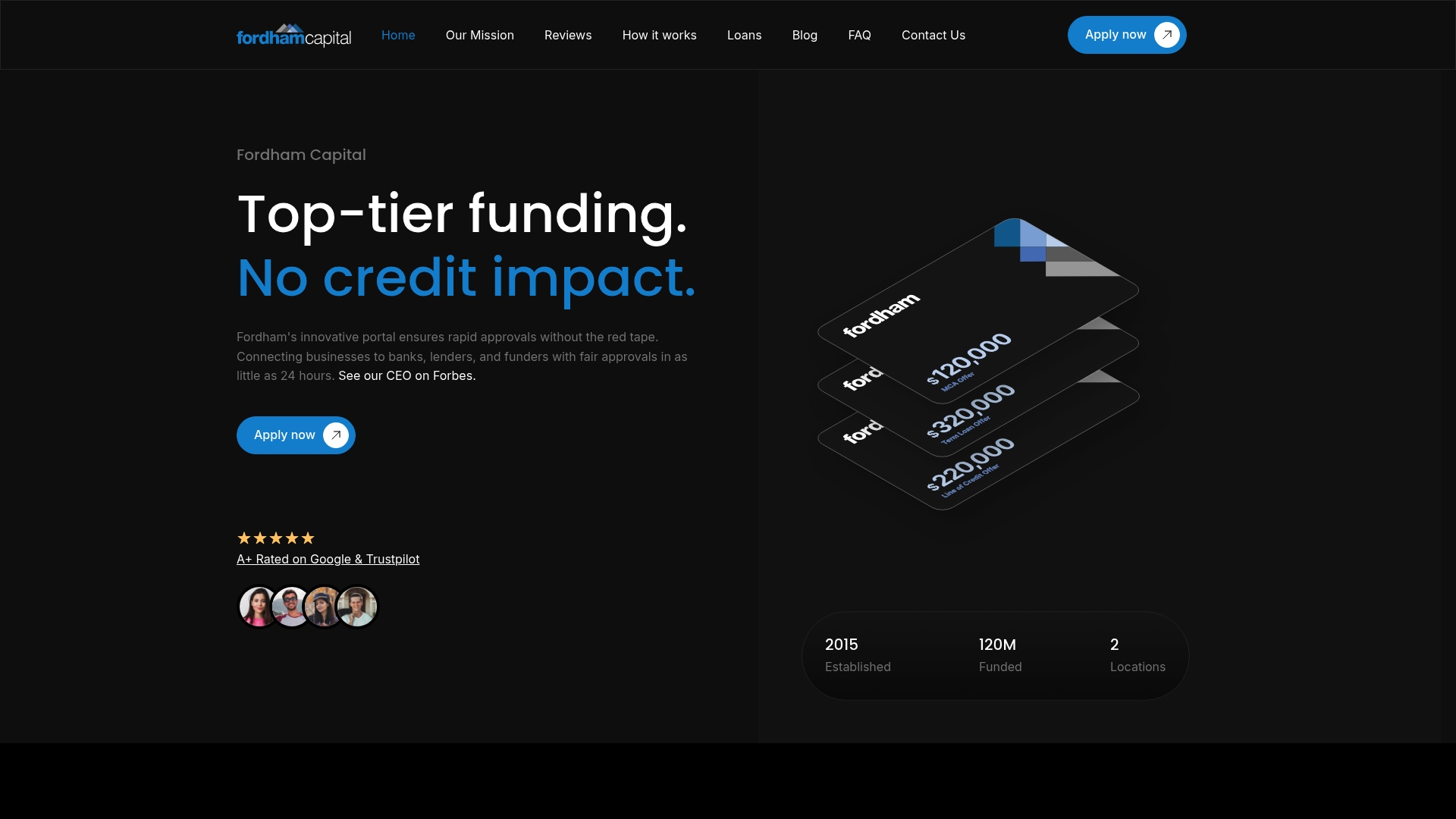
From there, the process runs in a straight line: you submit Fordham Capital’s one-page application, the network runs underwriting checks against your deposit history and cash-flow patterns, and offers come back from matched lenders, often within 24 hours. You compare rate, term, fees, and repayment cadence side by side before accepting anything.
Going through a marketplace like this instead of applying to lenders one by one means fewer credit inquiries and less duplicated paperwork, though it also means you’re seeing the offers the network surfaces rather than every lender in the market. For most owners moving fast on working capital, that tradeoff favors the marketplace. If your statements are clean and your timeline is tight, apply now and see what offers come back.
For deeper context on the terms and standards covered here, consult the FDIC on account best practices, Investopedia’s line of credit definition, NerdWallet on credit card stacking, and LendingTree’s no-doc loan breakdown. You can also verify any lender’s licensing through NMLS Consumer Access.
This article is general information, not a substitute for advice from a qualified financial advisor. Consult a qualified financial professional about your own circumstances before acting on anything here.
At Fordham Capital, we've made the application process straightforward and reassuring. Dive in and explore your financial options with confidence, knowing there's no impact on your credit score and no obligations. We review your details and offer customized solutions based on what you're looking for.