
AR financing is a loan secured by your invoices, while factoring is the sale of those invoices to a third party. Choose AR financing when you need to preserve customer relationships and keep collections in-house, and choose factoring when you need fast, ongoing invoice conversion and can accept a higher cost for that speed.
TL;DR:
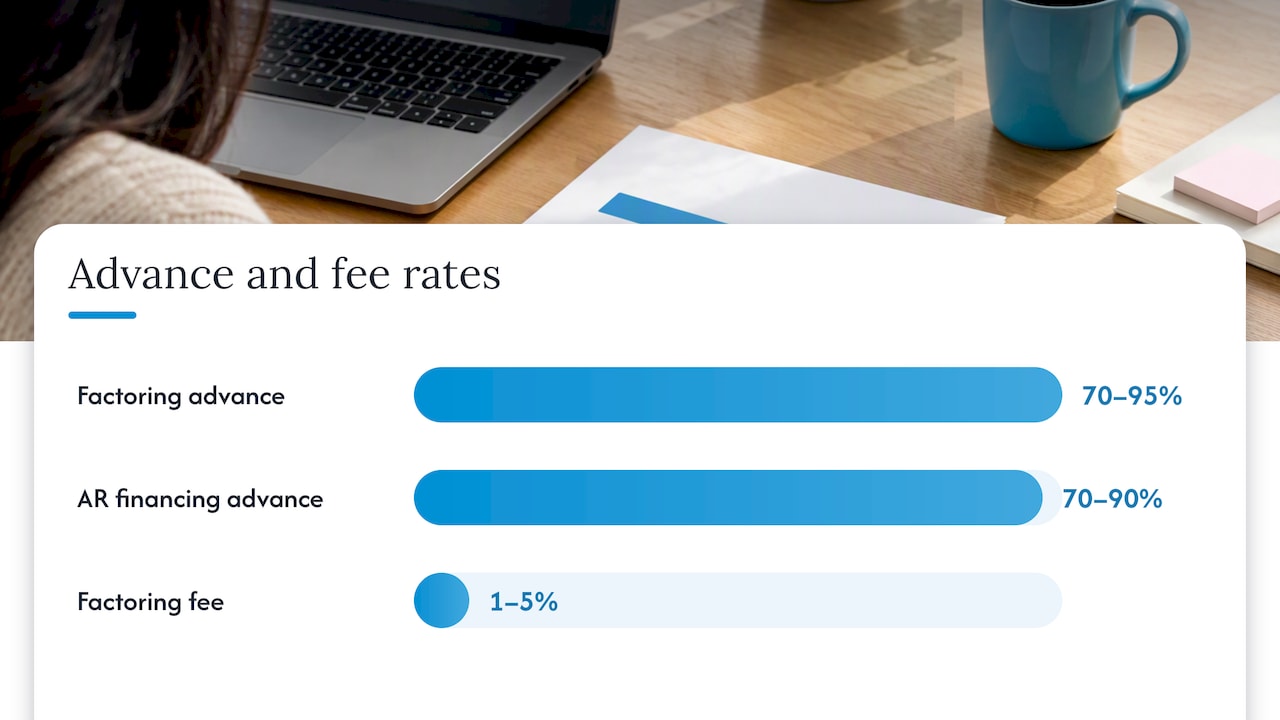
- Factoring usually involves higher fees of 1% to 5% of the invoice value but provides faster cash flow than AR financing.
- AR financing advances between 70% and 90% of the invoice, often at a lower overall cost, with the obligation remaining on your books.
- Factoring transfers ownership of receivables and typically involves third-party collection, influencing customer communication and potential risk exposure.
- Businesses with thin credit histories benefit more from factoring, while established firms with predictable receivables often prefer AR financing for lower cost and control.
- Choosing between the two depends on whether speed or customer relationship preservation is your priority, and reassessing is recommended if your customer base shifts.
Accounts receivable financing, often called invoice financing, is a loan where your unpaid invoices act as collateral. You borrow against the value of outstanding invoices rather than selling them outright, which means you still own the receivables and remain responsible for collecting from your customers.
Lenders typically advance 70% to 90% of the invoice value upfront, charging interest on the outstanding balance plus origination or administrative fees. Because the lender is not buying the asset, approval often hinges on your company’s overall creditworthiness and financial statements, not just your customers’ payment history.
A key operational benefit is confidentiality: your customers generally never know the arrangement exists, since you keep managing collections and client communication yourself. This matters for businesses that treat customer relationships as a competitive asset.
AR financing tends to work best for:
Factoring is the outright sale of your invoices to a third party, known as a factor, in exchange for immediate cash, and can also be structured through advanced receivable monetization techniques like receivable tokenisation under VARA. Instead of borrowing against receivables, you transfer ownership of them, and the factor takes on the job of collecting payment from your customers.
The mechanics typically follow three steps: you sell an invoice to the factor, the factor advances a percentage of its value, and the factor collects from your customer when the invoice comes due. Once collected, the factor releases the remaining balance, known as the reserve or holdback, minus its fee.
Recourse terms determine who absorbs the loss if a customer never pays. With recourse factoring, you remain liable and must buy back or replace the unpaid invoice. With non-recourse factoring, the factor accepts the credit risk, though this protection usually comes at a higher fee. According to the Comptroller’s Handbook, factoring typically involves purchase of receivables, often without recourse, and factors frequently perform servicing functions including collections, which requires prudent risk management on both sides.
Factoring is standard in industries with thin credit histories and fast invoice cycles:
The decision between these two products comes down to five practical dimensions that affect your daily operations and your balance sheet.
Factoring fees typically fall between 1% and 5% of invoice value, which means a company factoring $50,000 a month could pay anywhere from $500 to $2,500 monthly just in factoring costs, before accounting for advance rate gaps.
Small businesses without an established credit file often gravitate toward factoring because the underwriting focuses on your customers’ ability to pay, not your own balance sheet. Established firms with strong receivables aging reports tend to find AR financing less expensive and less disruptive to client relationships over the long run.
Both products solve the same basic problem, a gap between invoicing and payment, but they come with different trade-offs that matter depending on your situation.
Pro Tip: Before signing with either provider, ask for a sample monthly statement so you can see exactly how fees, advances, and holdbacks are calculated in practice, not just in the sales pitch.
Matching the product to your business situation prevents costly mismatches down the road.
Before signing any agreement, run through a checklist that covers the terms most likely to cause problems later.
Factoring fees commonly range from 1% to 5% of invoice value, so comparing two providers’ quoted rates side by side, along with their advance percentages, gives you a realistic total cost rather than just a headline number.
Red flags include vague fee schedules that reference “additional charges may apply” without specifics, contracts that lock you in for 12 months with steep early termination fees, and providers reluctant to share a sample statement before you sign.
Numbers make the trade-off concrete. Say you have a $100,000 invoice due in 45 days and you need cash now.
Holdback timing matters just as much as the headline rate. A factor that releases reserves quickly after customer payment improves your cash cycle more than a slightly lower fee paired with a slow reserve release.
How a transaction is recorded on your books depends on whether it meets true-sale criteria. Factoring can qualify as a sale under ASC 860 if the transfer meets specific conditions around control and continuing involvement; otherwise, it gets treated as a secured borrowing regardless of what the contract calls it.
The Comptroller’s Handbook on trade finance notes that factoring transactions require prudent risk management and are often conducted by nonbank firms, which underscores why reviewing terms with a qualified advisor matters before you sign.
A few warning signs show up repeatedly in problematic financing arrangements.
Pro Tip: Ask any prospective factor for two or three client references in your industry and a sample collections communication, since how they talk to your customers reflects directly on your brand.
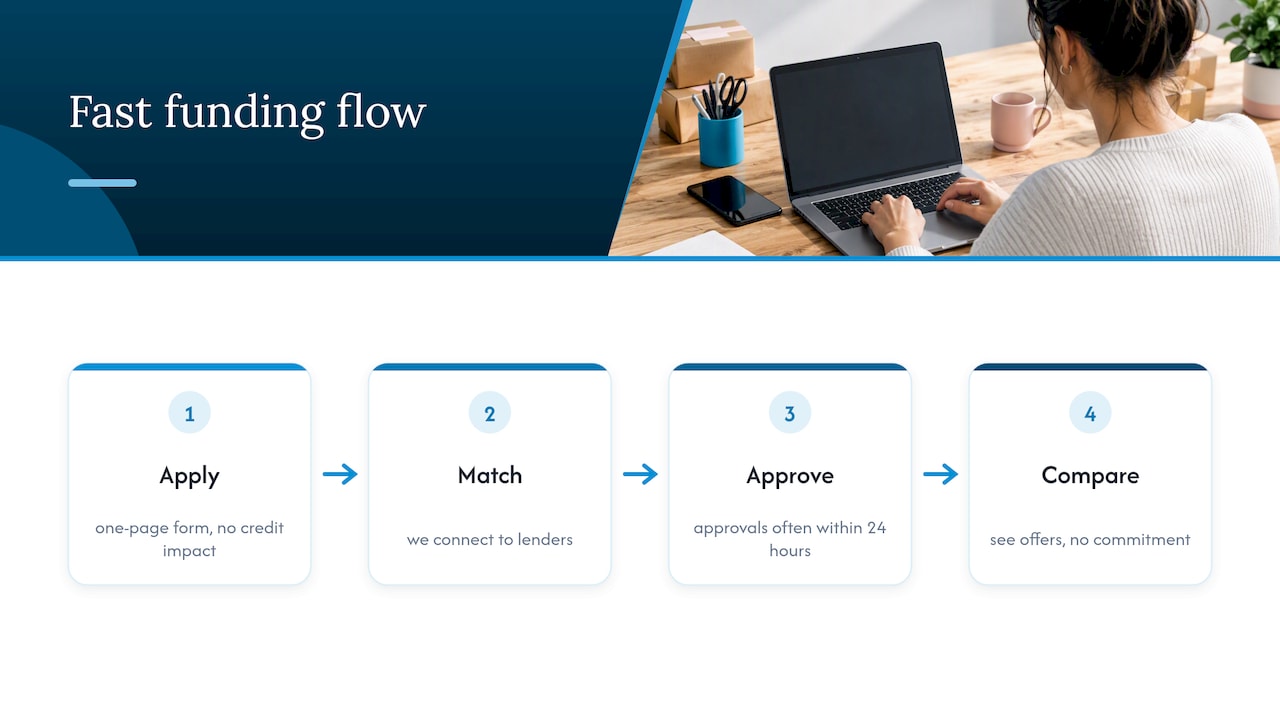
For business owners who need working capital without navigating the complexity of factoring contracts or lengthy loan underwriting, we connect you to a network of banks and alternative lenders through a single, one-page application. Our process is built around speed: approvals often come within 24 hours, and applying never impacts your credit score.
We operate as an originator rather than a direct lender or factor, which means we match your business with the right funding source from our network instead of locking you into one provider’s terms. We have helped clients secure significant funding, generating substantial client revenue along the way. If you want to compare SBA loans, a line of credit, or working capital options against factoring or AR financing quotes, our one-page application lets you see offers without committing to anything.
For a broader look at how marketplace and originator models differ from direct lenders, our guide on non-bank business financing walks through the landscape in more depth. You can start your application today and compare real offers before deciding which funding path fits your business.
The honest answer is that most businesses overthink this choice when the real question is simple: do you need speed more than you need to protect customer relationships, or vice versa. Run the numbers on a sample invoice using your actual rates before committing to either path, and get your CPA to confirm how the arrangement will hit your balance sheet.
If you want to see what funding options are available without affecting your credit, our one-page application gives you a fast way to compare offers.
— Rob
Factoring can cost more than a traditional loan, with fees commonly running 1% to 5% of invoice value, and it often requires notifying customers that a third party now handles collections. Recourse agreements also leave you liable if a customer fails to pay, which can create unexpected cash flow strain.
AR financing is a loan where your unpaid invoices serve as collateral, with lenders typically advancing 70% to 90% of invoice value upfront. You retain ownership of the receivables and continue managing collections yourself, repaying the loan with interest once customers pay.
Beyond the fee structure, factoring hands control of customer communication to a third party, which can affect the tone and consistency of your client relationships. Some contracts also include long-term exclusivity clauses or liens on all receivables rather than just the ones factored, limiting your flexibility to switch providers.
The two primary structures are recourse and non-recourse arrangements, which determine who bears the risk if a customer does not pay. In recourse deals you remain liable for unpaid invoices, while non-recourse arrangements shift that credit risk to the lender or factor, typically at a higher cost.
At Fordham Capital, we've made the application process straightforward and reassuring. Dive in and explore your financial options with confidence, knowing there's no impact on your credit score and no obligations. We review your details and offer customized solutions based on what you're looking for.