For most seasonal operators, a revolving business line of credit is the fastest way to close a predictable cash gap, because it charges interest only on what you draw and replenishes as you repay. A term loan or working-capital loan fits better for a single, known pre-season expense, while receivables financing solves a different problem entirely: invoices sitting unpaid from business customers. The move that actually gets you funded, regardless of which product you pick, is sizing your peak-to-trough working-capital need and pulling together a lender-ready file before you apply.
TL;DR:
- A revolving line of credit is ideal for recurring seasonal cash gaps, as it only charges interest on the amount drawn and resets with repayments.
- A fixed-term loan suits one-time, known pre-season expenses, with a set amount and schedule that eliminates ambiguity.
- Invoice factoring converts unpaid customer invoices into cash, helping businesses avoid delays from 30 to 60-day payment terms.
- Always verify total repayment amounts and ask about prepayment penalties, as rates alone do not reveal the full cost over the loan’s lifespan.
- The best financing option depends on your industry’s specific cash flow pattern, such as inventory financing for retailers or receivables financing for B2B suppliers.
Seasonal cash-flow solutions aren’t one-size-fits-all. Each product below solves a slightly different version of the same problem: you know money is coming, but not yet.
A revolving line of credit is built for recurring cycles. You draw what you need for payroll or inventory, pay it down as revenue comes in, and the available balance resets. Because interest only accrues on the drawn amount, a line sitting mostly unused costs you far less than a lump-sum loan you’re not fully using yet.
A term or working-capital loan makes more sense for a one-time, known expense. Think a walk-in freezer before summer rush or a delivery van before the holiday surge. You get a fixed amount, a fixed schedule, and no ambiguity about what you’re borrowing for.
Invoice factoring and accounts-receivable financing address a different gap: you’ve delivered the goods or services, but a business customer is sitting on a 30 to 60-day payment term. Factoring converts that unpaid invoice into cash today, minus a discount fee, so a slow-paying customer doesn’t stall your own next order.
Merchant and revenue-based financing repay as a percentage of daily sales, which flexes naturally with a slow month. Equipment financing ties directly to the asset you’re buying, often at a lower rate since the equipment itself secures the debt.
Match the product to the shape of your cash-flow gap, not to whichever offer arrives fastest. A recurring, predictable dip calls for a revolving facility. A one-time expense calls for a term loan. A stack of unpaid B2B invoices calls for factoring, full stop.
Before signing anything, ask the lender these questions directly:
That last question matters more than any advertised rate. Two offers with identical headline pricing can produce wildly different totals once you account for payment frequency and fees.
Pro Tip: Ask every lender for the total repayment amount in dollars, not just the rate. A 1.2 factor rate on a six-month term costs you far more per year than an 18% APR line, even though the factor rate looks smaller on paper.
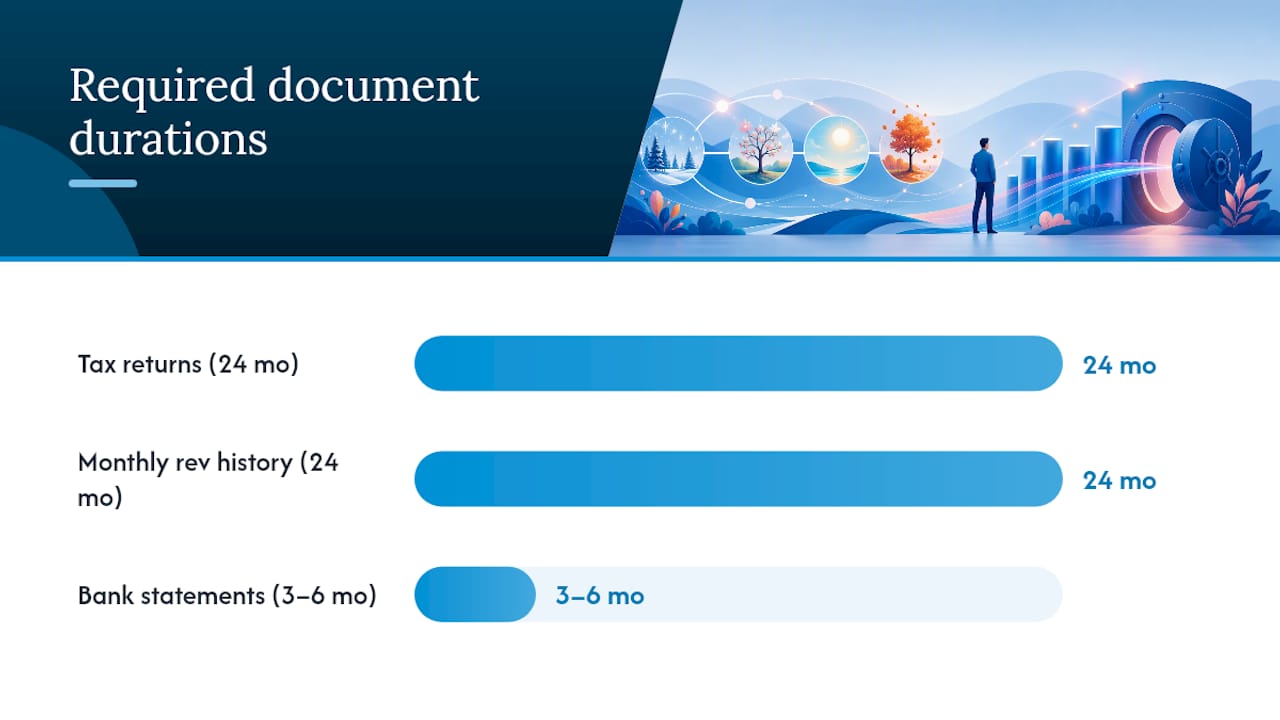
Lenders need to see that your slow months are seasonal, not a sign your business is failing. That distinction lives entirely in your paperwork.
Standard documents include:
For a seasonal file specifically, add 24 months of month-by-month revenue and expense history, so a lender can see the same trough repeating on a calendar pattern rather than a one-off decline. Include a cash-flow forecast marking your expected peak and trough dates, current supplier terms, any inventory commitments already in motion, and a short written repayment plan. Reconcile your deposits ahead of time and attach a brief explanation for any unusual spike. A cash flow lending overview breaks down exactly what underwriters look for when they review these numbers.
The 7(a) Working Capital Pilot gives seasonal businesses a structure most owners never think to ask about: a monitored line of credit that can be borrowed against inventory or receivables, rather than a flat unsecured loan.

The program offers two facility types. Asset-based WCP lets you draw against inventory and receivables as collateral, which suits retailers building stock ahead of a season. Transaction-based WCP ties funding to specific purchase orders or contracts, which fits suppliers and project-driven operators.
Key program facts worth knowing:
The SBA reported the program had delivered more than $150 million in new lending since its rollout began, evidence that participating lenders are actively putting this structure to work rather than treating it as a shelf product. Ask any SBA lender you talk to whether they participate in WCP before assuming your only options are unsecured.
A factor rate and an APR are not the same measurement, and confusing them is how seasonal borrowers end up overpaying. A factor rate is a flat multiplier on the amount borrowed. An APR annualizes the cost of that borrowing over time. A short repayment window can make a low-looking factor rate translate into a punishing effective annual rate, especially once you factor in daily or weekly withdrawals instead of monthly.
Watch for these red flags before you sign:
Federal Reserve survey data shows small-business borrowers frequently report dissatisfaction with online lenders over exactly these issues: high effective rates and unfavorable repayment terms that weren’t obvious at signing.
Pro Tip: Get the exact payment schedule, total repayment figure, and any prepayment penalty in writing before you accept an offer. A verbal assurance from a sales rep means nothing once the contract is signed.
The right product usually tracks your industry’s specific cash-flow pattern more than your business size.
Size your peak-to-trough gap first, then gather two years of monthly figures, tax returns, and bank statements while you still have time. Prequalify with two or three lenders in parallel rather than committing to the first fast offer. Speed is not the same as fit: a same-day online approval can hide a rollover structure or daily-withdrawal schedule that strains you right when revenue dips. Compare total repayment dollars before you sign anything, and read the renewal clause twice.
— Rob
Some online funding platforms are built to address the bottleneck of moving from “I need capital before peak season” to funded, aiming to do so without weeks of back-and-forth or a credit hit just for checking options. Certain platforms connect businesses to a network of banks and alternative lenders through streamlined applications, sometimes offering approvals within 24 hours.
Some platforms offer SBA Loan, Line of Credit, and Working Capital options that align with seasonal business needs, such as revolving facilities for recurring payroll swings or capital for pre-season inventory builds. Some funding intermediaries maintain strong reputations with various ratings and have funded significant amounts for small and medium-sized businesses, assisting clients in revenue growth without necessarily requiring collateral. Pull together the documents from the lender-ready checklist above, then apply through the one-page application to see which offers you actually qualify for.
Verify current SBA Working Capital Pilot terms directly on the SBA’s 7(a) program page, and review CFPB lending guidance for compliance definitions that affect how lenders structure offers.
The monthly payment on a $50,000 business loan depends entirely on the term length and rate structure, which vary by lender and product type. A working-capital loan through Fordham Capital’s network, for example, is priced case by case based on your business profile, so the exact figure comes from a personalized offer rather than a flat table.
A loan of that size is almost always structured through an SBA product or a larger term facility, where monthly payments depend heavily on maturity length and the guaranty structure. The SBA’s 7(a) Working Capital Pilot allows maturities up to 60 months on qualifying facilities, which directly affects how that payment is spread out.
Qualifying generally requires demonstrating consistent revenue, a clean debt schedule, and documentation covering at least one to two years of tax returns and bank statements. Lenders lending at this size also weight your cash-flow forecast heavily, since requests usually need to show a clear peak-to-trough pattern rather than a one-off shortfall.
A landscaping company that earns most of its revenue between April and October, then covers payroll and equipment costs through a slower winter, is a classic seasonal business. Retailers dependent on holiday sales, tourism operators, and agricultural suppliers follow the same pattern: predictable peaks and troughs tied to a calendar rather than random fluctuation.
At Fordham Capital, we've made the application process straightforward and reassuring. Dive in and explore your financial options with confidence, knowing there's no impact on your credit score and no obligations. We review your details and offer customized solutions based on what you're looking for.