The SBA no longer requires an SBSS score for any of its loan programs. Effective March 1, 2026, the agency ended mandatory SBSS prescreening for 7(a) Small Loans, which are loans of $350,000 or less. Older guides still say you need a 155 or a 165 to qualify. That advice is out of date. Lenders now judge your cash flow, documentation and guarantor profile instead of a single number.
This guide explains what the SBSS score was, why so many pages still quote it, what replaced it and how to prepare an application that holds up under the current rules.
SBSS stands for Small Business Scoring Service, a FICO model built to estimate how likely a small business is to repay a loan. It blended the owner’s personal credit with business-level data. Lenders could run it quickly, so the SBA used it as a first filter on smaller loans.
The model drew on several inputs. Personal credit history of the owner or guarantor came from the major bureaus, Equifax, Experian and TransUnion. Business credit reports, business financial data and details from the loan application were added to that. In practice, one number summarized both the person and the company.
The SBA used the score as a screen, not as the lender’s final decision. In 2023 the SBA described an acceptable score as 155 or higher for 7(a) loans under $500,000, with exceptions for SBA Express, CAPLines and export loans. The agency later set the passing score for 7(a) Small Loans at 165, which is the figure its sunset notice cites. That is why you see both 155 and 165 across the web. Neither applies today.
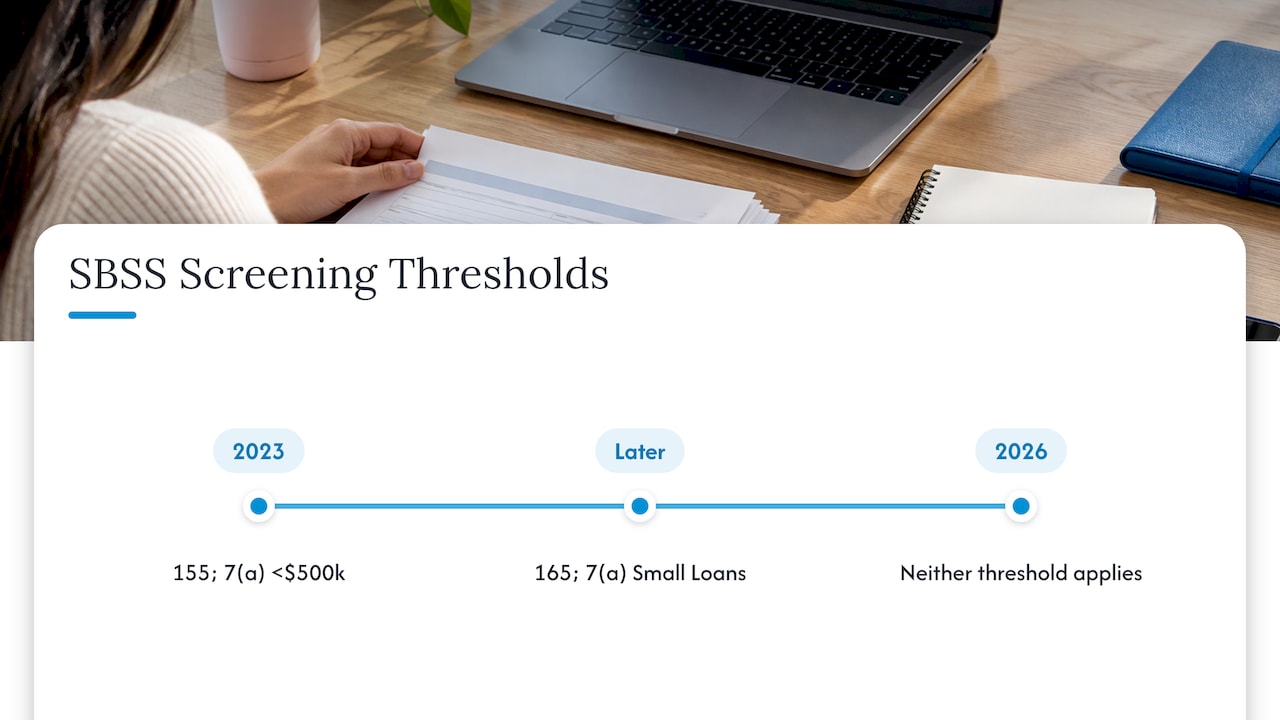
The SBA’s procedural notice ended the requirement. From March 1, 2026, no SBA loan program requires an SBSS score. Two details matter here:
If a website tells you that you must hit a 155 or 165 to get SBA financing, check its publication date. Pages written before 2026 describe the old rule.
The replacement is a conventional credit review. Under the SBA’s procedural notice, lenders must use prudent, generally accepted commercial credit-analysis procedures consistent with how they treat similarly sized loans that carry no SBA guaranty. A lender may use a scoring model its regulator permits, but it may not rely solely on consumer credit scores.
For 7(a) Small loans, the same notice sets two concrete tests:
The credit memo also has more to cover. A passing SBSS score used to satisfy the repayment-ability determination, and the memo now has to address the loan request, operations, management and other key factors. Expect more questions about what the money is for and who runs the business day to day.
The practical shift is that the application tells a story with numbers. A score used to compress that story into one figure. Now the lender reads the underlying evidence.
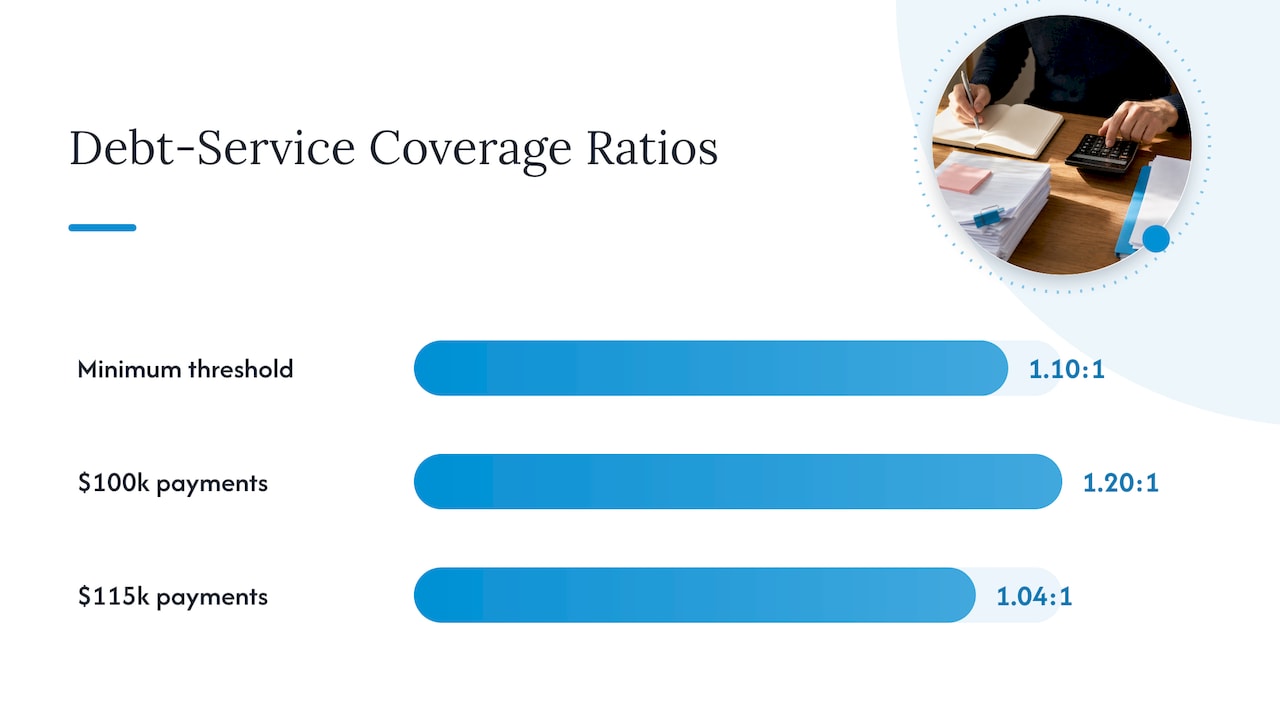
Suppose your business generates $120,000 a year in cash available for debt service, and your total annual debt payments, including the proposed SBA loan, would be $100,000. Your coverage ratio is 1.20:1, which clears 1.10:1. If the payments were $115,000, the ratio would be about 1.04:1 and would fall short. The figures are illustrative, not a prediction for your business, but they show why cash flow now matters more than a prescreen number.
Even under the old system, the score was one path among several. The SBA’s 2023 announcement noted that lenders could also use cash-flow analysis, comparable non-SBA processes or standard underwriting criteria. A result under the benchmark did not by itself end the request. The lender could run a fuller credit analysis within SBA and lender requirements.
That history is useful now. It means applicants with thin business credit, a recent startup history or a rough patch on a personal report could still be financed when the cash flow and documentation were strong. With the score gone, that route is the main route.
The SBA anticipated this case. If an applicant cannot meet the 7(a) Small debt-service-coverage requirement, the lender may consider processing the request as a Standard 7(a) loan or, when authorized, an SBA Express loan. That gives you a conversation to have with your lender about the product structure, not only a yes or no. Our comparison of SBA Express and 7(a) loans walks through how the two differ.
Without a score to chase, preparation is about evidence. A reasonable order of work:
If you want a broader view of how personal and business credit enter the picture, our guide to business loan credit scores covers it.
A healthy credit profile does not settle eligibility. A few items show up repeatedly:
Our SBA loan requirements guide lists the full set of eligibility points, and the collateral guide covers what lenders may ask you to pledge.
SBA policy is revised regularly. SOP 50 10 8.1 applies to 7(a) and 504 applications that received loan numbers on or after October 1, 2026. Ask your lender which version of the rules covers your file, and confirm any threshold you read online against the SBA’s own pages.
Most owners who search for an SBSS number are really asking one question: “Will I get approved?” The honest answer in 2026 is that no single number decides it anymore.
We built Fordham Capital around the idea that good businesses get overlooked when a process leans on one data point. Our one-page application and our network of banks and lenders exist so you can see which lenders fit your profile, without a long form and without a credit score impact when you apply.
With the SBSS requirement gone, we think the SBA’s direction plays to the strengths of owners who run their companies well. Show steady deposits, a clear use of funds and a realistic repayment plan, and a lender has real material to work with. Our advisors help you organize that story, and if SBA timing or structure is not the right fit, our network also includes lines of credit and working capital options.
Start by knowing your own numbers. Then let us show you who is likely to say yes.
Rob
If you want to see what is available without stacking up applications, we can help. Fordham Capital is an online marketplace, not a direct lender. You complete one short application, and we connect you with banks and alternative lenders in our network for SBA loans, business lines of credit and working capital financing. Our published pricing shows SBA loans at 8% per year and lines of credit at 1-3% per month. Working capital has no published price.
You can start on the Fordham Capital homepage, and an advisor will walk through your options. If you are still weighing timing, our guide to SBA loan turnaround time sets realistic expectations. If you want to compare loan types, see how SBA loans stack up against conventional loans or how unsecured lending approval works.
No. Since March 1, 2026, the SBA does not require an SBSS score for any loan program, including 7(a) Small Loans. Lenders may still use their own scoring models, and SBA Express lenders may continue using business scoring where their regulator allows it.
The SBA called 155 or higher acceptable in 2023 for 7(a) loans under $500,000. Its later sunset notice describes a minimum passing score of 165 for 7(a) Small Loans of $350,000 or less. Both figures are historical now.
They apply standard commercial credit analysis. For 7(a) Small loans that includes debt-service coverage of at least 1.10:1 and a review of two months of commercial bank activity. They may not rely solely on consumer credit scores.
It is possible, though each lender sets its own standards. Strong cash flow, organized records and a clear purpose for the funds help your case. If coverage falls short, the lender may consider a Standard 7(a) or SBA Express structure instead.
At Fordham Capital, we've made the application process straightforward and reassuring. Dive in and explore your financial options with confidence, knowing there's no impact on your credit score and no obligations. We review your details and offer customized solutions based on what you're looking for.